How to Become a Truck Driver in 2026: Step-by-Step

How to become a truck driver in 2026 starts with choosing the type of commercial driving you want to do, getting a Commercial Learner’s Permit (CLP), completing any required Entry-Level Driver Training (ELDT), passing the CDL skills test, and meeting your state’s licensing and medical requirements. The exact process varies by state, but the federal framework is consistent across the United States.
If you are starting from zero, plan on learning the licensing rules first rather than signing up for the first school you find. The most important early decisions are whether you need a Class A or Class B CDL, whether you want interstate or intrastate work, and whether your target job requires endorsements.
How to Become a Truck Driver in 2026: Step-by-Step
The Federal Motor Carrier Safety Administration, or FMCSA, does not issue CDLs. Your home state issues the license. However, federal rules set many of the baseline requirements that states follow for commercial drivers.
- Choose the type of truck driving job you want.
- Read your state’s CDL manual.
- Meet age, residency, and medical requirements.
- Apply for a Commercial Learner’s Permit.
- Complete required Entry-Level Driver Training.
- Hold the CLP for the required period.
- Pass the CDL skills test.
- Add any endorsements your job requires.
- Apply for entry-level driving jobs.
Each step matters because the wrong CDL class or missing endorsement can limit the jobs you can legally accept.
Step 1: Decide Which CDL Class You Need
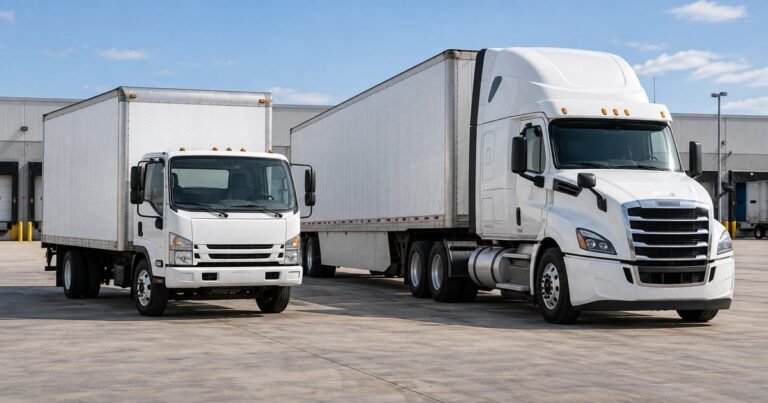
There are three main CDL classes: Class A, Class B, and Class C. The class you need depends on the vehicle’s weight ratings, whether you tow a trailer, and the type of passengers or cargo you carry.
| CDL Class | Typical Use |
|---|---|
| Class A | Tractor-trailers and many combination vehicles |
| Class B | Straight trucks, large delivery trucks, buses, and some vocational vehicles |
| Class C | Certain smaller commercial vehicles carrying passengers or hazardous materials |
If your goal is long-haul tractor-trailer work, a Class A CDL is usually the path to research first. If you want local delivery, dump truck, bus, or other straight-truck work, a Class B CDL may be enough depending on the vehicle and job.
Do not rely only on job titles. A “delivery driver” position can involve very different vehicle classes. Check the vehicle’s gross vehicle weight rating and the employer’s CDL requirement.
Step 2: Read Your State CDL Manual
Your state CDL manual is the best starting point for the licensing process. FMCSA specifically recommends getting the manual from your state licensing agency because states control application procedures, acceptable documents, fees, and testing logistics.
The manual also explains endorsement tests, vehicle inspection procedures, air-brake rules, and state-specific requirements. Studying the correct manual helps you avoid preparing for rules that do not apply where you live.
Step 3: Meet the Basic Age and Medical Requirements
Federal rules generally require a driver to be at least 21 to operate a commercial motor vehicle in interstate commerce. Drivers ages 18 through 20 may be able to obtain a CDL and drive in intrastate commerce, depending on state rules.
“Interstate” means commercial driving that crosses state lines or is part of interstate commerce. “Intrastate” means the driving stays within one state under that state’s rules.
Most commercial drivers also need to meet Department of Transportation medical qualification requirements. Depending on the type of driving, that usually involves an examination by a certified medical examiner and proof of medical qualification.
Your state may also require proof of identity, residency, lawful status, and other documents before issuing a CLP or CDL.
Step 4: Get a Commercial Learner’s Permit
A Commercial Learner’s Permit allows you to practice driving a commercial vehicle on public roads when accompanied by a qualified CDL holder. You normally earn the CLP by passing the required knowledge tests for the class and endorsements you are pursuing.
Before the CLP is issued, your state checks eligibility and driving history. FMCSA says states check an applicant’s driving record covering the previous 10 years across the states and District of Columbia.
The exact permit fee and required documents vary by state, so use your state licensing agency’s current checklist.
Step 5: Complete Entry-Level Driver Training
Entry-Level Driver Training is a federal training requirement that applies to many new CDL applicants. If you are applying for a Class A or Class B CDL for the first time, you generally must complete the required ELDT before you can take the CDL skills test.
ELDT also applies to drivers upgrading from Class B to Class A and to first-time applicants for certain endorsements, including school bus, passenger, and hazardous materials endorsements.
The training must come from a provider listed in FMCSA’s Training Provider Registry. After you successfully complete the required training, the provider submits your completion information electronically to the registry.
Federal ELDT rules establish a minimum standard, but a state can impose additional training requirements. For example, a state may require a specific number of behind-the-wheel hours even though the federal rule focuses on demonstrated proficiency.
Step 6: Hold the CLP for at Least 14 Days
FMCSA states that CDL applicants generally must hold the Commercial Learner’s Permit for at least 14 days before becoming eligible to take the CDL skills test. You must also have completed any required ELDT before the skills test.
Use this practice period to work on vehicle inspection, basic control skills, turns, backing, lane positioning, and safe operation. The test is designed to measure practical competence, not just your ability to memorize written material.
Step 7: Pass the CDL Skills Test
The standard CDL skills test includes three main parts: the Vehicle Inspection Test, the Basic Controls Test, and the Road Test. You must pass the required portions for your CDL class and vehicle configuration.
- Vehicle Inspection Test: shows that you understand how to inspect important safety components.
- Basic Controls Test: checks low-speed maneuvering and vehicle control.
- Road Test: evaluates your ability to operate safely in real traffic conditions.
Using the wrong type of vehicle for testing can result in restrictions on your license. For example, testing in a vehicle without air brakes or with an automatic transmission can affect what you are allowed to drive later. Check your state manual before scheduling the test.
Step 8: Add the Endorsements Your Job Requires
Endorsements authorize you to operate certain specialized commercial vehicles or carry certain cargo. Common examples include tanker, passenger, school bus, doubles/triples, and hazardous materials endorsements.
Some endorsements require additional knowledge or skills testing. The hazardous materials endorsement has additional federal security and eligibility requirements, so allow extra time if your target job needs it.
Step 9: Apply for Entry-Level Truck Driving Jobs
Once your CDL is issued, focus on jobs that match the class and endorsements on your license. New drivers commonly start in regional freight, local delivery, dedicated routes, food service, construction, waste hauling, or other commercial driving roles.
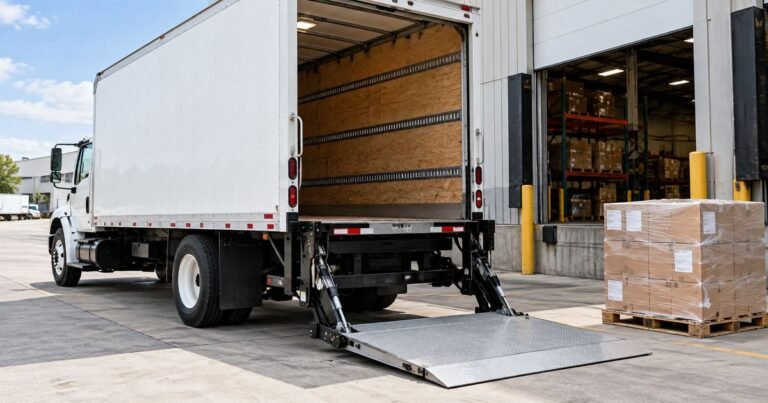
Compare more than the advertised pay. Review home time, route type, whether you are paid by mile or hour, benefits, training repayment agreements, equipment condition, expected weekly hours, and whether loading or unloading is part of the job.
Be especially careful with employer-sponsored CDL programs. Some are useful, but they may require you to work for the carrier for a set period or repay training costs if you leave early. Read the contract before signing.
How Long Does It Take to Become a Truck Driver?
There is no single national timeline. The process depends on your state, training format, testing availability, and whether you pass each test on the first attempt.
A full-time CDL training program can move faster than a part-time program, but faster is not always better. Your goal should be to become safe and test-ready, not simply to finish in the shortest possible time.
The federal 14-day CLP holding period is only one piece of the timeline. Medical appointments, ELDT availability, state test scheduling, and employer onboarding can add additional time.
How Much Does CDL Training Cost?
CDL training costs vary widely by school, state, program length, and whether training is employer-sponsored. Avoid assuming that the cheapest program is the best value.
Before enrolling, ask for a written breakdown that includes tuition, permit fees, testing fees, medical exam costs, equipment fees, retest charges, and any repayment obligation. Also verify that the provider is listed in FMCSA’s Training Provider Registry if ELDT applies to you.
Common Mistakes New CDL Applicants Should Avoid
- Choosing the wrong CDL class: decide what vehicle and job you want before paying for training.
- Using an unregistered ELDT provider: verify the provider through FMCSA’s Training Provider Registry.
- Ignoring state-specific rules: federal rules are only the baseline.
- Testing in a vehicle that creates restrictions: understand how the test vehicle can affect your license.
- Signing a training contract without reading it: check repayment and employment commitments.
- Focusing only on starting pay: compare schedule, benefits, home time, route type, and physical workload.
Official resources: FMCSA CDL licensing guide, FMCSA Entry-Level Driver Training, and the FMCSA Training Provider Registry.
FAQs: How to Become a Truck Driver in 2026
Q. Do I need truck-driving school to get a CDL?
A. Many first-time Class A and Class B applicants must complete ELDT through a registered provider before taking the CDL skills test. Your state may have additional training requirements.
Q. Can I get a CDL at age 18?
A. In many states, drivers ages 18 through 20 can obtain a CDL for intrastate commercial driving. Federal interstate commercial driving generally requires age 21.
Q. How long must I hold a CLP before the CDL skills test?
A. FMCSA says applicants generally must hold the CLP for at least 14 days before taking the CDL skills test, along with completing any required ELDT.
Q. Is Class A or Class B better for a new truck driver?
A. Neither is automatically better. Class A usually opens more tractor-trailer and combination-vehicle jobs, while Class B can be enough for many straight-truck, delivery, bus, and vocational jobs.
Conclusion
Learning how to become a truck driver in 2026 is mostly about following the right sequence: choose the correct CDL class, meet state and medical requirements, earn a CLP, complete required ELDT, pass the skills test, and then target jobs that fit your license.
Your next step should be to download your state’s current CDL manual and check the FMCSA Training Provider Registry before paying for training.
Disclaimer: This article provides general educational information. CDL, medical, age, training, endorsement, and testing requirements can vary by state and may change. Confirm current rules with FMCSA and your state licensing agency before making licensing or career decisions.