Best Tractors for 10 Acres: HP, Size & Attachments

The best tractor for 10 acres is commonly a compact tractor with enough weight and horsepower for mowing, loader work, grading, brush control, and the attachments your property requires.
Ten acres gives owners more room to work, but it can also create longer mowing times, more driveway maintenance, heavier material handling, and larger brush or pasture areas.
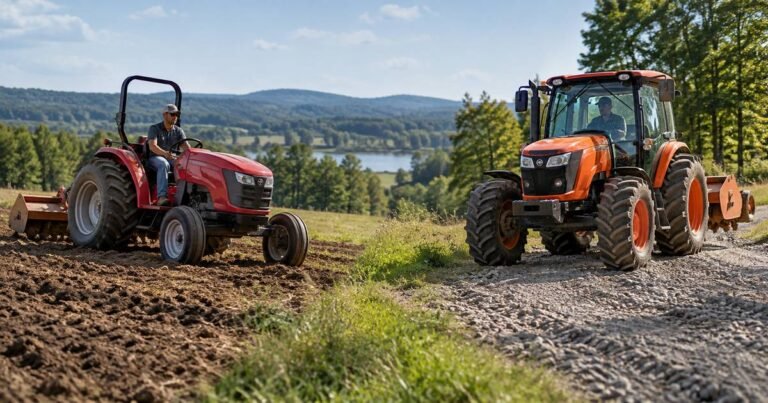
Best Tractors for 10 Acres: Match Size to the Jobs
A small compact tractor may handle ten maintained acres well, while a heavier compact or utility machine can make sense for livestock, frequent loader work, large rotary cutters, hay, or rough terrain.
Horsepower Range to Research
Many ten-acre owners compare tractors from the upper-20s through roughly 40 horsepower or more. Treat that only as a research range, not a fixed recommendation.
The right number depends on PTO equipment, loader needs, terrain, time available, and whether the tractor is doing property maintenance or true agricultural work.
Mowing Ten Acres
Mower width and field condition affect time more than acreage alone. Smooth pasture can be handled with a wider cutter, while wooded or irregular land may favor a narrower, more maneuverable setup.
Check PTO horsepower recommendations for the mower and make sure the tractor has enough weight for safe operation.
Loader and Material Handling
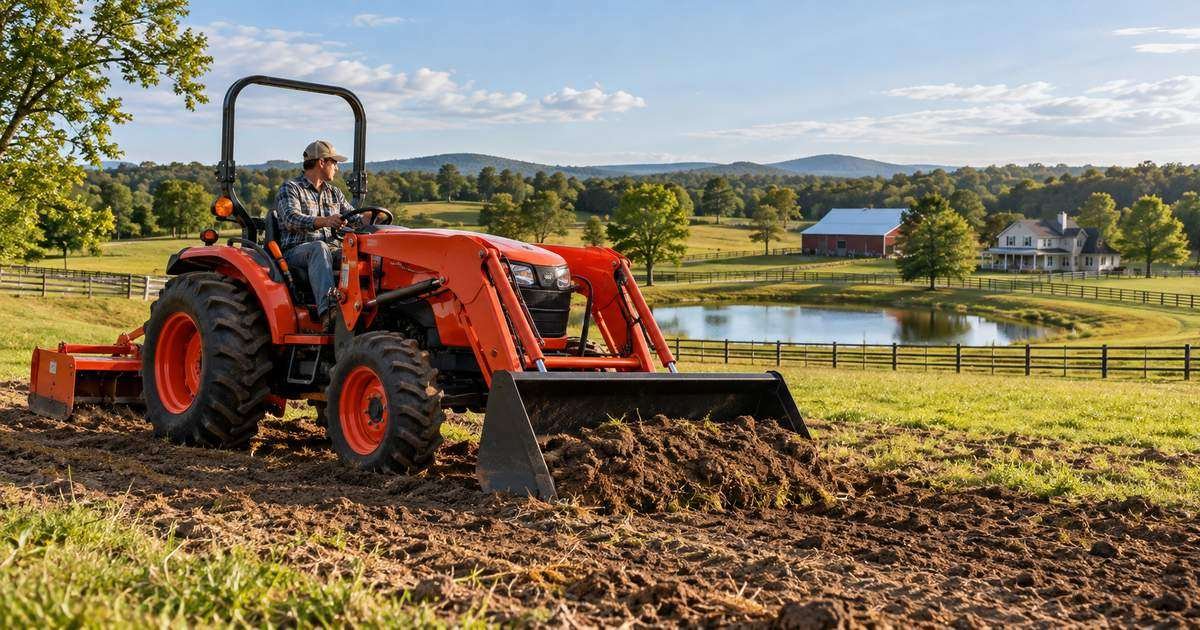
Ten-acre properties often involve gravel, mulch, logs, manure, fencing supplies, feed, and pallets. Loader performance deserves careful attention.
Compare lift height, lift capacity, bucket rollback, hydraulic flow, and recommended ballast. Pallet forks or a grapple can make the loader much more useful.
Compact vs Utility Tractor
A compact tractor is easier around homes, gates, and landscaping. A utility tractor offers more weight, drawbar capacity, and room for heavier implements.
If your ten acres includes hay production, heavier tillage, or frequent large-bale handling, utility-class machines deserve consideration.
Tires and Ground Conditions
R4 tires offer a useful compromise for mixed loader and property work. R1 agricultural tires provide stronger traction in field conditions, while turf tires reduce lawn damage.
Consider soil type, slopes, snow, mud, and how often the tractor must cross finished lawn.
Time and Comfort
A larger tractor or wider implement can reduce job time significantly. If you spend many hours mowing or moving material, seat comfort, controls, cruise features, and a cab may matter more than expected.
Balance comfort against cost, storage height, branch clearance, and maintenance complexity.
Practical Buying or Ownership Checklist
- Identify mowing acreage versus wooded or landscaped acreage.
- Choose expected cutter or mower width.
- Calculate loader and bale-handling needs.
- Compare compact and utility tractor weights.
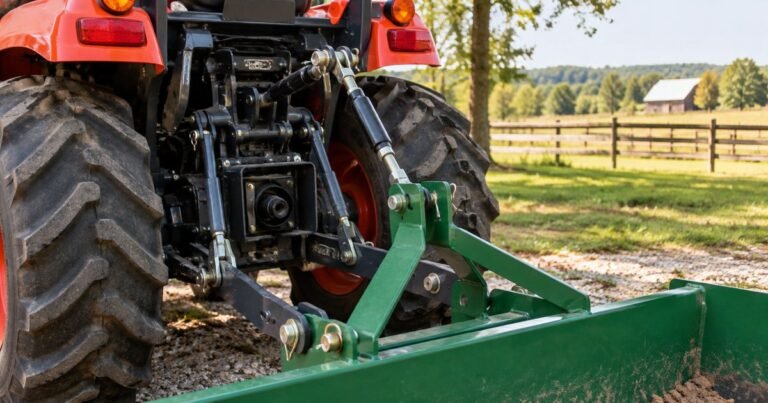
- Check PTO horsepower and hydraulic requirements.
- Test the tractor with similar attachments if possible.
Also see our tractor sizing guide and hydrostatic vs gear tractor guide.
Pasture Work vs Property-Maintenance Work
Ten acres used mainly as lawn or light pasture can be maintained with a smaller tractor than ten acres used for livestock, brush clearing, heavy grading, or material handling. The same acreage can create very different workloads.
If you plan to maintain fence lines, move feed, handle manure, clear snow, maintain a long driveway, or carry round bales, those jobs should influence the tractor choice more than mowing alone. Make a seasonal job list before comparing models.
How Implement Width Changes Productivity
On ten acres, implement width can have a noticeable effect on time. A wider rotary cutter, finish mower, or grading tool covers more ground per pass, but it also needs more PTO power, tractor weight, and turning room.
A smaller tractor can still complete the job if you have more time. If you maintain the property only on weekends, a slightly larger tractor and implement may provide better value because it shortens recurring work rather than simply adding horsepower.
Loader Work and Bale Handling
Loader capacity becomes important if you move gravel, soil, logs, pallets, feed, or hay. Large round bales can be especially demanding because the load is heavy and carried in front of the tractor.
Do not compare only the maximum loader number. Check lift height, capacity at full height, bucket or fork weight, ballast requirements, and front-axle limits. A tractor that lifts a load near the ground may not be able to place it safely on a trailer or stack.
Cab or Open Station?
A cab adds weather protection, heat, and often air conditioning. That can make a major difference if you spend hours mowing, clearing snow, or working in dust. A cab also adds cost, height, glass, and repair complexity.
Open-station tractors are easier under low branches and usually cost less. If you work in wooded areas or store the tractor in a low building, measure carefully before choosing a cab.
Transporting a Tractor for Service
A ten-acre tractor may still need to visit a dealer for warranty or major repairs. If you own a trailer, confirm its gross rating, deck length, ramp capacity, and tie-down points before choosing a heavier tractor.
Transport weight includes the tractor, loader, attachments, ballast, fuel, and anything else on the trailer. If you do not plan to tow it yourself, ask the dealer about pickup and delivery charges so they are included in ownership planning.
When a Utility Tractor Starts to Make Sense
A utility tractor becomes more attractive when the work shifts from property maintenance toward agriculture. Larger hay tools, heavier tillage, frequent large-bale handling, and long hours under load can justify more weight and power.
For many ten-acre owners, a compact tractor is still easier to store, transport, and maneuver. Move up to utility size because the work requires it, not simply because the property reaches a certain acreage number.
A Practical Ten-Acre Example
Imagine ten acres with six acres of pasture, two wooded acres, a long gravel lane, and a barn. A compact tractor in the 30-to-40-horsepower class may offer enough PTO power for a useful rotary cutter while still remaining maneuverable near the barn and trees.
If that same property includes round-bale handling, heavier tillage, or regular farm production, the owner may be better served by a heavier compact or utility tractor. The acreage itself is unchanged, but the required lift capacity and implement size increase dramatically.
Plan for Service, Fuel, and Downtime
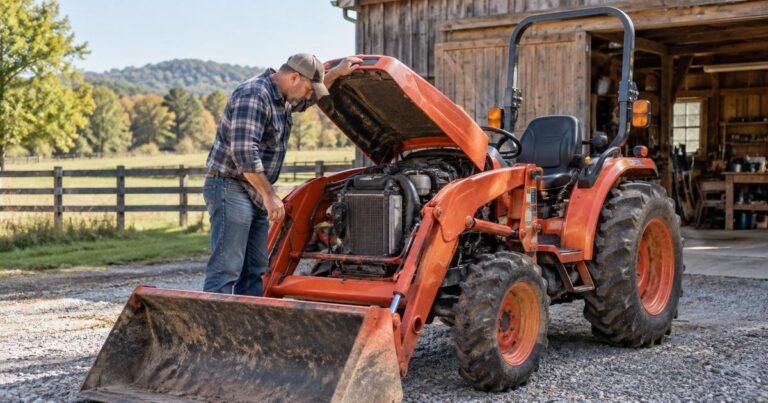
Ten-acre owners often use their tractors enough that downtime becomes frustrating. Ask about dealer service, mobile repair, warranty transport, and normal maintenance intervals before buying.
Also consider fuel storage, battery maintenance, seasonal service, and where the tractor will be kept during winter. A machine that starts reliably and is easy to service often creates more value than one with slightly better specifications but weak support.
Buying Used for a 10-Acre Property
A used tractor can make sense when you need more size or weight than your budget allows new. Focus on condition, maintenance history, loader wear, tire life, and parts support rather than chasing the lowest hour meter.
For a ten-acre property, a well-maintained used compact tractor with a loader and one or two useful implements can be a better value than a smaller new tractor that needs several attachments added later.
Think About Future Property Changes
Pasture can become garden, woods can be cleared, livestock can be added, and driveways can be extended. If you expect the workload to increase, leave some capacity margin rather than buying a tractor that barely handles today’s jobs.
That does not mean buying the largest machine available. It means choosing a tractor that can accept the attachments and workload you realistically expect over the next several years.
FAQs: Best Tractors for 10 Acres
Q. Is 30 horsepower enough for 10 acres?
A. It can be for many maintenance jobs, but the answer depends on implement requirements, loader work, terrain, and how quickly you want to finish tasks.
Q. Should I buy a utility tractor for 10 acres?
A. Not necessarily. A compact tractor is often enough. Utility tractors make more sense when work is heavier, implements are larger, or agriculture is more intensive.
Q. What attachment should I buy first?
A. A loader is often the most versatile first attachment, followed by the mower or grading implement you use most often.
Conclusion
The best tractor for 10 acres should be chosen around workload, not acreage alone. Compare PTO power, tractor weight, loader specifications, attachment size, terrain, and the time you want to spend on each job.
Disclaimer: General educational information only. Follow manufacturer limits and use properly matched implements and ballast.