ELD Mandate Explained: Who Needs an Electronic Logging Device?

The ELD mandate generally requires many drivers who must prepare records of duty status under federal hours-of-service rules to use a compliant electronic logging device. However, several important exemptions exist.
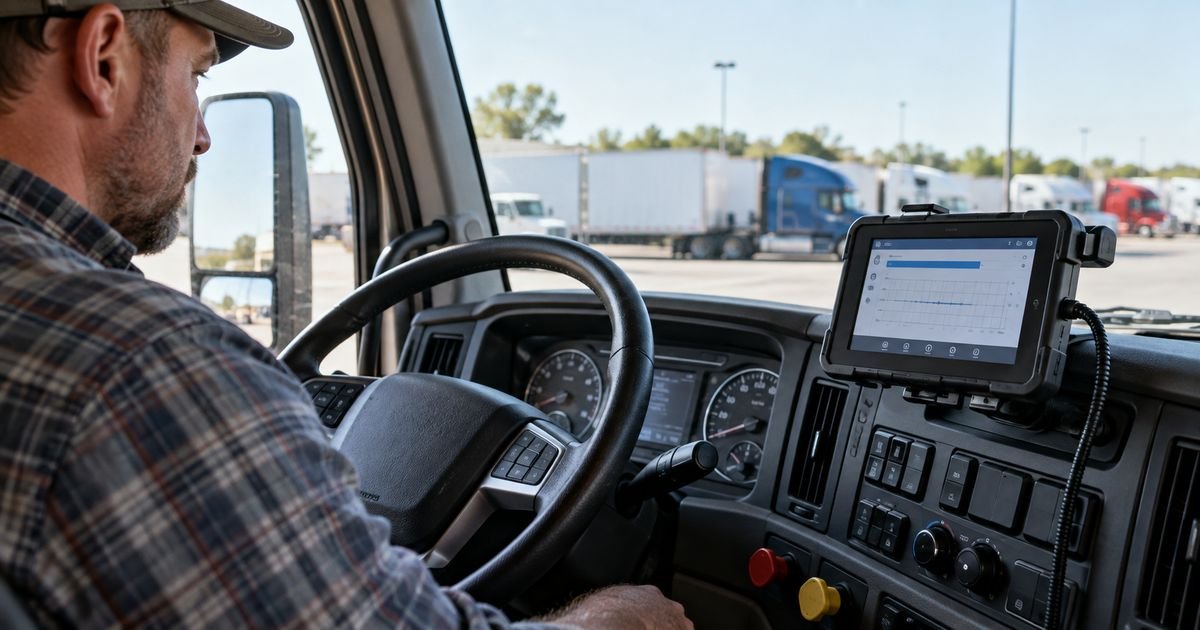
An ELD automatically records driving time by connecting to vehicle data and helps create an electronic record of duty status. It does not replace the driver’s responsibility to follow hours-of-service rules.
ELD Mandate Explained
FMCSA requires covered motor carriers and drivers to use registered ELDs when they are subject to the electronic logging requirements. The rule is tied to record-of-duty-status obligations, not simply to whether a driver holds a CDL.
Who Commonly Needs an ELD?
Drivers who regularly operate commercial motor vehicles in interstate commerce and are required to maintain records of duty status are often covered.
Carrier size does not automatically create an exemption. A one-truck business can still be subject to the rule if its operation falls within the requirements.
Common ELD Exemptions
FMCSA recognizes several exemptions, including certain drivers who use paper logs only a limited number of days within a rolling period, qualifying driveaway-towaway operations, and drivers operating vehicles manufactured before the applicable model-year cutoff in the rule.
Short-haul drivers may also avoid ELD use when they qualify for the short-haul exception and do not need regular records of duty status.
ELD Does Not Change Hours-of-Service Limits
An ELD records duty status. It does not give a driver more legal driving time than a paper log would.
Property-carrying drivers generally operate under federal limits such as the 11-hour driving limit within a 14-hour window after the required off-duty period, subject to exceptions and detailed rules.
What an ELD Records
- Driving time
- Engine power status
- Vehicle motion status
- Date and time
- Location information at required events
- Vehicle and carrier identification information
Drivers still enter or confirm certain duty-status information and certify their records.
What Happens if the ELD Malfunctions?
Drivers and carriers should follow FMCSA malfunction procedures, including reconstructing records when necessary and repairing or replacing the device within the required period.
Keep required backup materials and know how your specific device handles roadside data transfer.
How to Check Whether Your ELD Is Registered
FMCSA maintains a list of registered ELDs. Carriers should verify the device rather than relying only on a seller’s marketing claim.
For driving-time rules, see our hours-of-service guide once published.
The 8-Day Paper-Log Exception
One commonly misunderstood exception applies to drivers who use paper records of duty status no more than 8 days during any rolling 30-day period. This does not mean a driver can simply choose paper logs whenever convenient.
Carriers should track how often the driver falls outside a qualifying short-haul exception or otherwise needs a log. Once the driver exceeds the exception conditions, ELD requirements may apply.
Pre-2000 Vehicle Exception
FMCSA provides an exception for qualifying vehicles with engines manufactured before model year 2000. The rule focuses on engine model year rather than simply the year shown on the truck’s registration.
Operators using older equipment should keep documentation that supports the engine model year if it is not obvious from the vehicle records.
Driver Responsibilities With an ELD
The device records driving automatically, but drivers still need to select duty status when appropriate, add required annotations, review edits, and certify their records.
Drivers should know how to display and transfer records during a roadside inspection. Training should cover the specific device installed in the truck rather than only general ELD theory.
Carrier Responsibilities
Carriers must maintain required records, prevent harassment or improper coercion, and have procedures for malfunctioning devices. They should also verify that the chosen device appears on FMCSA’s registered ELD list.
Because ELD registration is based partly on manufacturer self-certification, carriers should monitor FMCSA notices in case a device is later removed from the registered list.
What to Do During an ELD Malfunction
FMCSA has specific procedures for reconstructing logs and repairing or replacing a malfunctioning ELD. Drivers should know where backup paper logs are kept and who to contact at the carrier.
Do not wait until an inspection to learn the procedure. Malfunction planning should be part of normal driver training.
Short-Haul Drivers and ELDs
Drivers who qualify for a short-haul timecard exception generally are not required to keep a standard record of duty status for those qualifying days, so an ELD is not required for that work. The driver must continue to meet every condition of the applicable short-haul exception.
If a driver falls outside the short-haul conditions often enough to require RODS for more than 8 days in a rolling 30-day period, the normal ELD requirement can apply unless another exception is available.
Driveaway-Towaway Exception
FMCSA also provides an ELD exception for qualifying driveaway-towaway operations where the vehicle being driven is the commodity being delivered, or where the transported vehicle meets the specific rule for a motorhome or recreational vehicle trailer.
This exception is narrow. A company moving one of its own trucks from one terminal to another does not automatically create a qualifying driveaway-towaway operation.
Pre-2000 Vehicle Guidance
Current FMCSA guidance says a vehicle that is pre-2000 by the model year reflected through the VIN-based registration criteria is not required to use an ELD. The guidance also addresses later-model vehicles that have a qualifying engine predating model year 2000.
For rebuilt or engine-swapped vehicles, the motor carrier should maintain documentation on motor and engine changes at its principal place of business. Because this guidance was revised in October 2026, operators using older equipment should rely on the current FMCSA version rather than older summaries.
Registered ELD List
Carriers should confirm that a device appears on FMCSA’s registered ELD list before relying on it for compliance. A fleet GPS, timecard app, or telematics product is not automatically a compliant ELD.
FMCSA can remove devices from the registered list, so fleets should monitor notices and vendor communications instead of treating selection as a one-time task.
Keep Backup Procedures
Drivers should know how to respond when an ELD malfunctions, including reconstructing records and using backup methods as required. Carriers should maintain a written procedure and train drivers before a malfunction occurs.
Keeping blank paper logs or another approved backup process available can prevent confusion during roadside inspections or device failures.
Keep Current Guidance With the Driver
ELD rules and agency guidance can change. Carriers using an exception should document why it applies and make sure dispatchers and drivers understand the same rule. That is particularly important for older vehicles, short-haul operations, and drivers who cross the 8-day RODS threshold only occasionally.
Use FMCSA’s current ELD pages and registered-device resources instead of relying on an old blog post, vendor brochure, or screenshot saved years earlier.
When an exception is central to your operation, review it periodically against current FMCSA guidance and keep supporting records organized. That reduces confusion when a driver changes routes, vehicles, or duty patterns.
Carriers should also review FMCSA notices when changing devices or vehicle assignments so drivers do not unknowingly rely on outdated hardware, old guidance, or an exception that no longer fits their operation.
FAQs: ELD Mandate
Q. Does every CDL driver need an ELD?
A. No. ELD requirements depend on the driver’s record-of-duty-status obligations and whether an exemption applies.
Q. Do short-haul drivers need ELDs?
A. Qualifying short-haul drivers may be exempt from regular records of duty status and therefore may not need an ELD.
Q. Can I use any logging app?
A. Covered drivers need a compliant registered ELD, not simply a generic time-tracking app.
Conclusion
The ELD mandate applies to many drivers who must maintain records of duty status, but exemptions matter. Confirm your operation, HOS status, and device registration through FMCSA before relying on an exemption or product claim.
Disclaimer: This article provides general educational information. ELD and hours-of-service rules can change and may depend on specific operations. Confirm current requirements with FMCSA.