2WD vs 4WD Tractor: Which Is Better for Your Property?

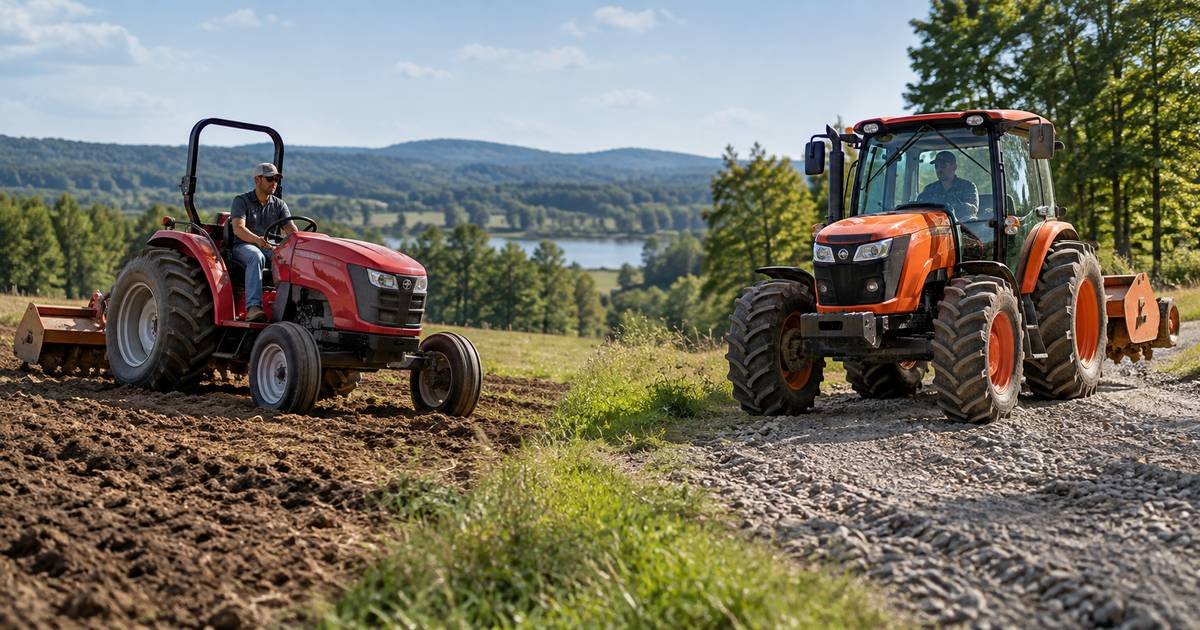
2WD vs 4WD tractor usually favors 4WD for compact-tractor owners who use loaders, work on hills, operate in mud or snow, or need more traction on loose ground.
Two-wheel-drive tractors can still be effective on flat, dry ground and may be simpler or less expensive, but four-wheel drive is widely valued for property work.
2WD vs 4WD Tractor: How the Systems Differ
A 2WD tractor drives only one axle, normally the rear. A 4WD or mechanical-front-wheel-drive tractor can send power to the front axle as well, improving traction when conditions are difficult.
Loader Work
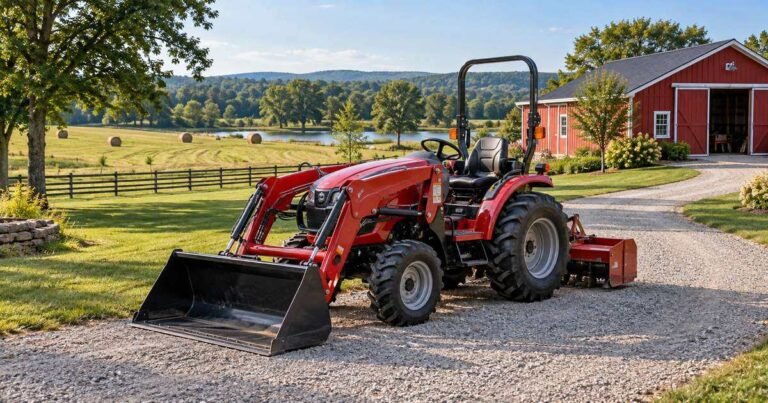
Front loaders shift weight toward the front axle and can reduce traction at the rear when improperly ballasted. Four-wheel drive helps the front tires contribute to movement.
Proper rear ballast is still essential. Four-wheel drive does not increase the loader’s rated capacity or make unsafe loads acceptable.
Hills and Uneven Ground
Extra driven wheels can improve traction when climbing or traveling over uneven surfaces. Stability, however, depends on tractor width, center of gravity, ballast, tire condition, and operator technique.
Four-wheel drive should never be treated as protection against rollover.
Mud and Snow
4WD provides a major advantage in snow, soft soil, wet grass, and mud because torque is distributed to more tires.
Tire choice and chains can matter as much as drive configuration in extreme conditions.
Mowing and Flat Ground
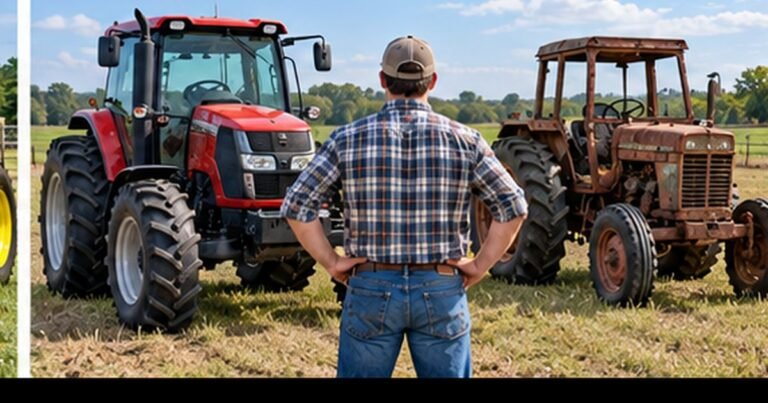
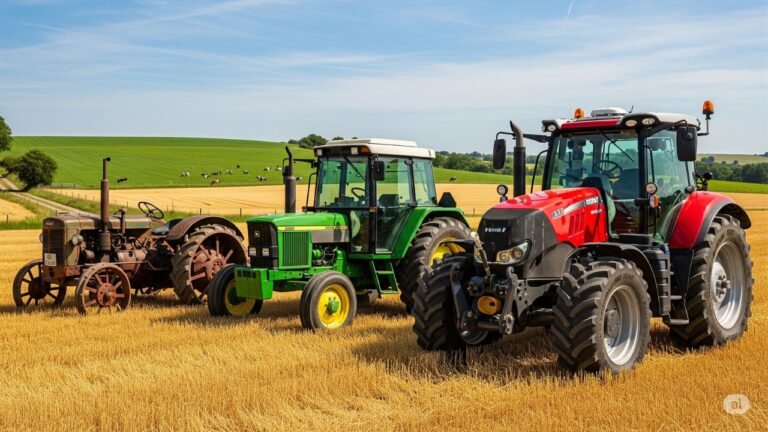
For dry, flat mowing or simple field work, 2WD may be adequate. Older utility and farm tractors performed decades of work with two-wheel drive.
Property owners who frequently switch between mowing, loader work, grading, and winter use often appreciate the flexibility of 4WD.
Turning and Driveline Use
Some 4WD systems can tighten or resist on high-traction surfaces because front and rear tires travel different distances during turns.
Follow the operator manual about when to engage or disengage 4WD, especially on pavement.
Cost and Complexity
4WD adds components and can increase purchase and repair cost. Front axle seals, joints, shafts, and gears require inspection and lubrication according to the service schedule.
The benefit is additional usable traction in a wide range of property conditions.
Practical Buying or Ownership Checklist
- Evaluate hills, mud, snow, and soil softness.
- Consider how often you will use a front loader.
- Choose tires for your surface.
- Plan proper ballast.
- Review 4WD operating instructions.
- Compare total ownership cost, not purchase price alone.
For broader selection help, read our tractor sizing guide.
How 4WD Helps With Loader Work
When a front loader is carrying material, more weight shifts toward the front axle. On a 2WD tractor, the rear tires still provide the driving force, so rear ballast becomes especially important for traction and stability.
With 4WD engaged, the front tires can help pull the tractor as well. That is useful when backing away from a pile, climbing a slope, or working on loose gravel. It still does not increase the loader’s rated capacity, and proper ballast remains necessary.
Braking and 4WD
Some tractors use driveline design so engaging 4WD can influence braking behavior, especially on slopes or during transport. The exact system varies by model.
Read the operator manual for downhill travel and road use. Do not assume every tractor behaves the same simply because it has four-wheel drive.
Tire Choice Can Change the Result
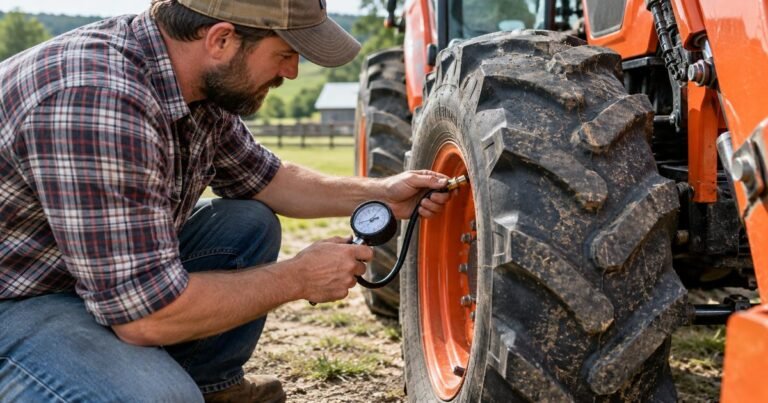
R1 agricultural tires provide strong traction in soil and mud. R4 industrial tires are durable for loader and mixed-surface work. Turf tires protect lawns better but can give up traction in soft ground.
A 4WD tractor on poor tires can still struggle. If snow, mud, or hills are your main concern, compare drive configuration, tire type, ballast, and chains as a complete traction system.
When 2WD Still Makes Sense
A 2WD tractor can be a good value for flat, dry mowing, light field work, and older utility-tractor applications. Simpler front axles can also reduce maintenance complexity.
If you rarely use a loader and the tractor stays on firm ground, the extra cost of 4WD may not be necessary. Used 2WD tractors can also be significantly cheaper than comparable 4WD models.
4WD Maintenance and Operating Habits
Four-wheel-drive systems add front differential gears, driveshafts, joints, seals, and axle components. These need the correct lubricant and regular inspection.
Avoid using 4WD unnecessarily on dry, high-traction pavement unless the operator manual allows it. Tire mismatch or driveline wind-up can increase wear.
Safety on Slopes
More traction does not make a steep slope safe. Rollover risk depends on the center of gravity, slope angle, surface, speed, load height, and direction of travel.
Use rollover protection and the seat belt as directed, keep loader loads low, avoid sudden turns, and follow the slope limits and procedures in the tractor manual.
Resale Value and Used-Tractor Shopping
On many compact tractors, buyers strongly prefer 4WD because loaders and mixed property work are common. That demand can help resale value, although condition, hours, brand, and attachments still matter more than drivetrain alone.
Used 2WD tractors can be excellent bargains when the work is flat, dry, and uncomplicated. Older utility tractors without front-wheel drive have handled mowing, hay, and field work successfully for decades. The lower purchase price can leave more budget for useful implements.
A Practical Property Example
A property owner with a flat five-acre lawn and a rear finish mower may see little benefit from 4WD most days. Another owner with the same acreage but a steep gravel driveway, snow, muddy woods, and a loader may use 4WD constantly.
This is another example of why acreage alone cannot determine tractor configuration. Surface, terrain, attachments, and weather create the real traction demand.
Fuel Use and Efficiency
Four-wheel drive does not automatically mean dramatically higher fuel use, but driving more components can add some mechanical loss. In most property work, the difference is usually less important than traction and productivity.
If 4WD lets the tractor complete a job with less wheel spin and fewer repeated passes, it can save time even if the driveline itself is slightly more complex.
Using Differential Lock
Many tractors include a rear differential lock that helps both rear wheels turn together when one begins to slip. This can temporarily improve traction even on a 2WD tractor.
Use differential lock only as the operator manual directs. Engaging it while turning or on high-traction surfaces can make steering difficult and increase driveline stress.
Cost of Repairs
A 4WD front axle contains more seals, gears, joints, and bearings than a simple 2WD front axle. On older tractors, front-axle repairs can be significant if the machine has seen years of loader work.
When shopping used, inspect front hubs, axle seals, steering joints, and driveshaft components carefully. A leaking or loose front axle can erase the savings of buying a cheaper tractor.
Final Buying Check
Think about your worst traction day rather than your best one. If mud, snow, slopes, loose gravel, or loader work are regular parts of ownership, 4WD usually provides useful flexibility. If the tractor will live on flat, dry ground and do simple mowing or field work, a well-kept 2WD machine can still be an economical choice.
Whichever layout you choose, match tires, ballast, and operating technique to the work instead of expecting drivetrain alone to solve traction or stability problems.
FAQs: 2WD vs 4WD Tractor
Q. Do I need 4WD for a front loader?
A. It is not always mandatory, but it is highly useful because loader work often benefits from additional front-axle traction.
Q. Is 2WD better for mowing?
A. It can be completely adequate on flat, dry ground. Turf damage depends more on tractor weight, tire type, and soil condition.
Q. Can I leave 4WD engaged on pavement?
A. Follow the tractor manual. Many systems should not be used continuously on dry, high-traction pavement because driveline binding can occur.
Conclusion
In most modern property-maintenance uses, 4WD provides valuable traction for loader work, snow, mud, hills, and grading. A 2WD tractor can still be a good choice for simpler work on flat, firm ground.
Disclaimer: This article provides general information. Use 4WD, ballast, and tires according to the operator manual and terrain conditions.