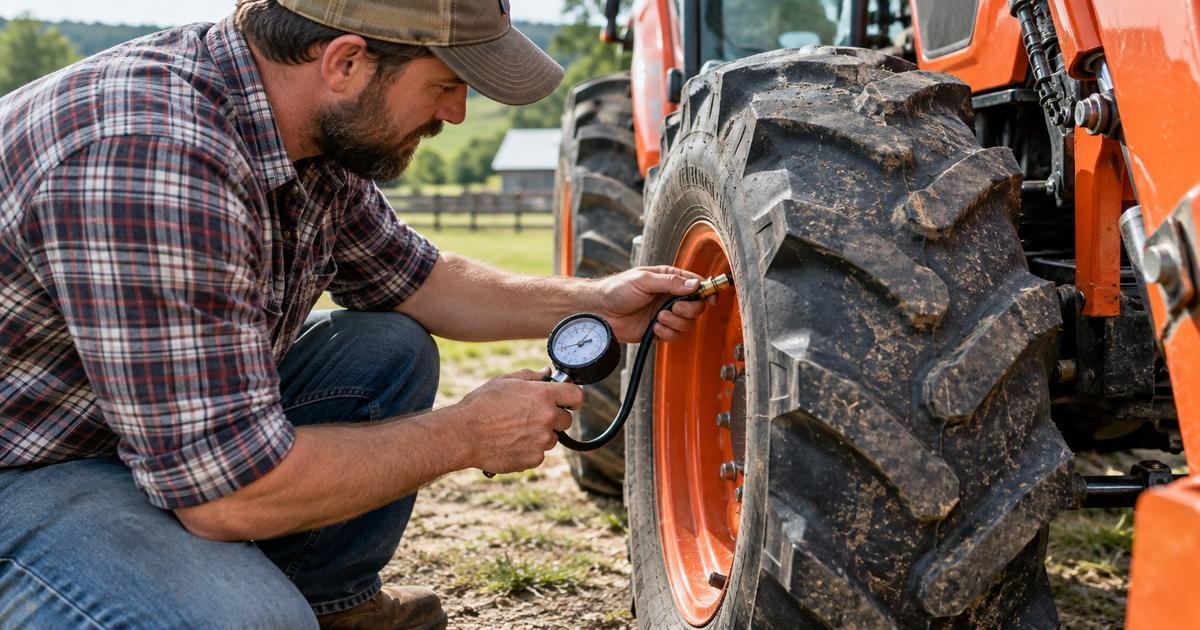
Tractor Tire Pressure Guide: PSI, Load & Traction

Tractor tire pressure should be set according to the tractor manual, tire manufacturer, axle load, tire size, and the work being performed. There is no single PSI that works for every tractor.
Correct inflation affects traction, tire wear, ride quality, soil compaction, loader stability, and road safety.
Tractor Tire Pressure Guide
Start With the Tractor and Tire Information
Use the operator manual and tire manufacturer’s load-and-inflation guidance. The tire sidewall gives limits, but the ideal operating pressure may depend on actual axle load and application.
Never exceed tire or wheel limits and do not reduce pressure below approved guidance just to gain traction.
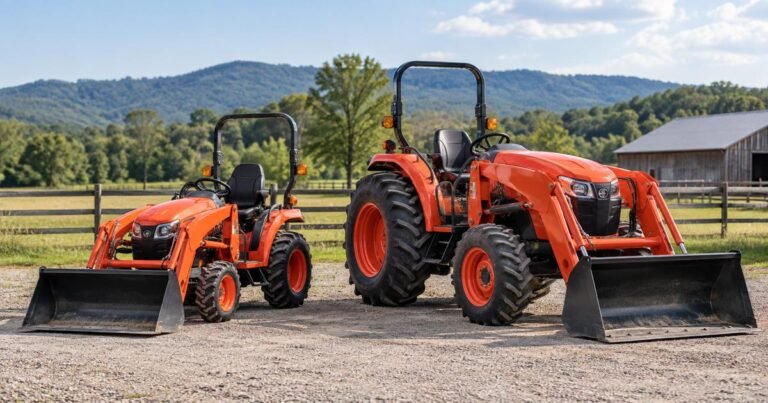
Loader Work Changes Front-Axle Load
A loaded front bucket or pallet forks can place much more weight on the front tires. Proper inflation and tire load rating are critical.
A pressure that feels comfortable for mowing may not be appropriate for repeated heavy loader work.
Field Traction and Soil
Agricultural tires can provide a larger footprint and lower slip when inflation is matched correctly to load. Too much pressure can reduce the footprint, while too little can damage the tire or create instability.
Radial and bias-ply tires can behave differently, so use the correct tables for the exact tire design.
Road Transport
Road travel creates heat and different loading conditions. Follow manufacturer recommendations for transport speed, inflation, and ballast.
Inspect tires for cuts, bulges, exposed cords, damaged valves, and loose wheel hardware before longer road travel.
Ballasted or Liquid-Filled Tires
Liquid ballast or wheel weights change axle loads and handling, but ballasted tires still require correct air pressure.
If tires contain liquid ballast, know the fill type and valve position before service. Tire work on large or ballasted tires can be hazardous and may require professional equipment.
Check Pressure Cold
Measure pressure before operation when practical because tire temperature can change the reading.
Use a gauge suitable for the lower pressures common in many tractor tires.
When to Recheck
- After adding or removing a loader
- After changing ballast
- Before road transport
- After installing different implements
- When seasons change significantly
- When a tire looks unusually soft or hard
For related traction and drivetrain guidance, see our 2WD vs 4WD tractor guide. Tire type, inflation, ballast, and driven axles all affect how well a tractor puts power to the ground.
Front and Rear Pressures Are Often Different
Front and rear tractor tires usually carry different loads and may use very different sizes. That means the correct front pressure can be very different from the rear pressure.
Loader work can increase front load dramatically, while heavy rear implements or ballast change rear-axle load. Use the correct load-and-inflation information for each axle rather than trying to make all four tires match.
Radial vs Bias-Ply Tires
Radial agricultural tires are designed to flex differently from bias-ply tires and can often operate effectively at lower pressures when correctly matched to load. That can increase the tire footprint and reduce soil compaction.
Do not copy a pressure used by a different tire construction. Use the tire manufacturer’s load table for the exact size, construction, speed, and axle load.
How to Estimate Axle Load
The most accurate approach is to weigh the tractor by axle in the configuration you actually use. Include ballast, loader, common implements, and normal fuel.
Portable farm scales, platform scales, or suitable commercial scales can help. Once you know axle load, compare it with tire manufacturer tables and tractor limits.
Signs of Incorrect Inflation
Excessive center tread wear, harsh ride, poor traction, or a small contact patch can suggest too much pressure. Sidewall damage, excessive bulging, rim slip, instability, or heat can be signs of insufficient pressure or overload.
Tire appearance alone is not enough for an exact diagnosis. Use a reliable gauge and approved specifications.
Cold Pressure vs Warm Pressure
Tire pressure rises as the tire warms during use. For consistent checks, measure pressure before long road travel or heavy work, ideally when the tire is cool and the tractor has been parked.
Do not release air from a warm tire simply because the pressure is higher than it was when cold unless the manufacturer directs you to do so. The temperature change itself may explain the increase.
Ballast Changes the Correct Pressure
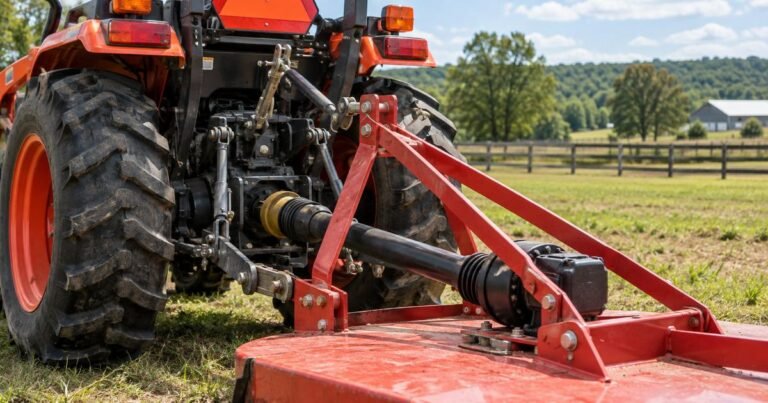
Wheel weights, liquid ballast, a backhoe, heavy three-point implements, and loaded buckets all change axle load. Tire pressure should be based on the tractor in the configuration you actually use.
If you add permanent ballast or begin carrying heavier loads, revisit the pressure instead of assuming the previous setting is still appropriate.
Loader Work Is Especially Hard on Front Tires
A front loader transfers substantial weight to the front axle when carrying material. Front tires that look acceptable during mowing can become overloaded during loader work if pressure and tire capacity are not adequate.
Keep loads low while traveling and avoid sharp turns with a heavy bucket. The correct tire pressure is only one part of safe loader operation.
Use a Reliable Gauge
Low-pressure tractor tires can be difficult to check accurately with a gauge designed mainly for passenger cars. Use a quality gauge that covers the expected range with useful resolution.
Check the same gauge against another trusted gauge occasionally. A reading that is several PSI off can matter when a tire operates at relatively low pressure.
Valve Stems and Slow Leaks
A tractor that repeatedly loses pressure may have a damaged valve core, leaking bead, puncture, cracked rim, or corrosion around the valve stem. Continually adding air treats the symptom rather than the cause.
Large agricultural tires can store significant energy. If a tire, rim, or bead is damaged, use a qualified tire service rather than attempting a risky repair.
Field Traction vs Road Transport
Lower approved pressures can increase the tire footprint in field work, which may improve traction and reduce soil compaction. Road travel creates a different demand because speed and heat increase.
If your tractor regularly switches between field work and higher-speed transport, follow the tire manufacturer’s guidance for both conditions. Do not assume one pressure is ideal for every task.
Checking Pressure After Seasonal Temperature Changes
Cold weather can reduce tire pressure, while summer heat can raise it. Seasonal changes are a good reminder to inspect all four tires rather than waiting for one to look visibly low.
A tractor that sits for long periods should also be checked before heavy loader or road work because slow leaks can develop while it is parked.
Record Your Working Setup
Owners who change ballast and attachments can benefit from keeping a simple note of approved pressures used for common configurations. Record the attachment, ballast, tire size, and pressure so you have a starting point next season.
Use the record only within manufacturer limits and update it whenever tire size, ballast, or typical load changes.
One Last Pressure Check
Before heavy loader work, road travel, or a long mowing day, give each tire a quick visual inspection and verify pressure with a gauge if anything looks different. Catching a slow leak early is easier than dealing with a damaged tire or rim after the tractor is loaded.
FAQs: Tractor Tire Pressure
Q. What PSI should tractor tires be?
A. There is no universal PSI. Use the tractor and tire manufacturer’s load-and-inflation guidance for your exact tire.
Q. Should front pressure increase with loader use?
A. The correct pressure may change with axle load. Follow the tire load table and tractor manual rather than guessing.
Q. Can lower pressure improve traction?
A. Within approved limits it can increase footprint on some tires, but underinflation can cause damage and instability.
Conclusion
Set tractor tire pressure from actual tire, load, and manufacturer information rather than using a generic PSI. Recheck when loader, ballast, implement, or transport conditions change.
Disclaimer: Tire failure can cause loss of control. Follow manufacturer pressure, load, and service requirements and use professional tire service when appropriate.