Subcompact vs Compact Tractor: Which Should You Buy?

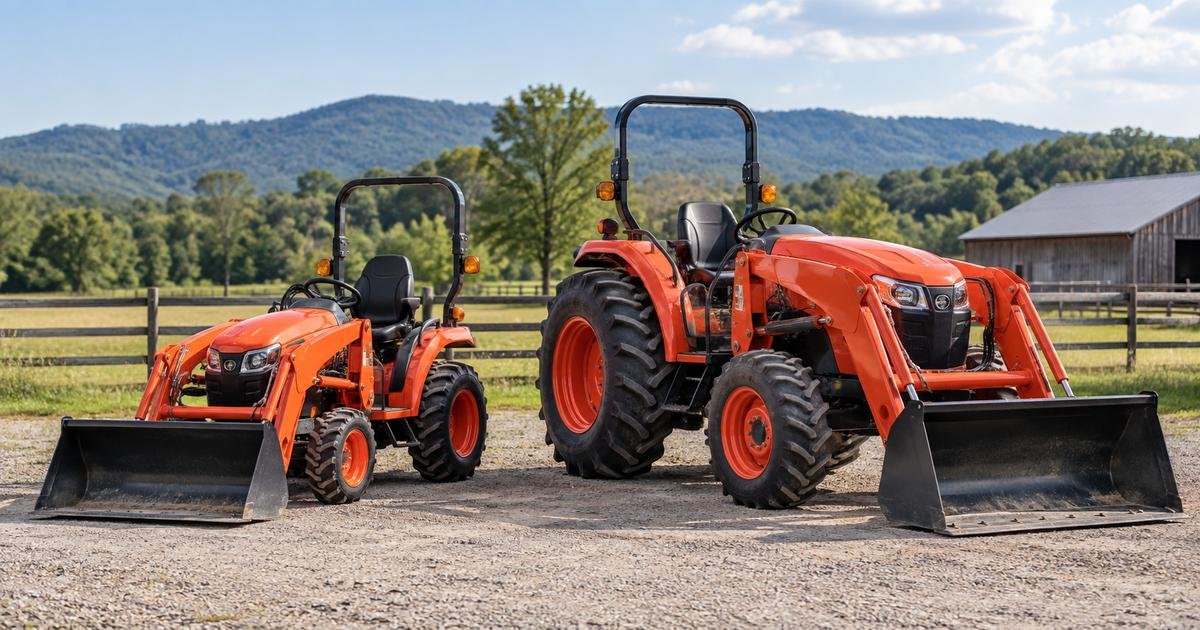
Subcompact vs compact tractor comes down to size, weight, ground clearance, loader capability, attachment needs, and how much work you expect from the machine.
Both categories can mow, use loaders, and run three-point or PTO implements, but compact tractors generally handle heavier work and larger attachments.
Subcompact vs Compact Tractor: Key Differences
A subcompact is easier to store and maneuver. A compact tractor is usually heavier, taller, and more capable for loader work, rough terrain, larger implements, and frequent property maintenance.
Physical Size
Subcompact tractors are designed to fit into tighter spaces and often use smaller tires and lower frames. That makes them convenient in garages, gardens, and landscaped properties.
Compact tractors provide more ground clearance and stability for rougher work, but they require more storage and turning room.
Weight and Traction
Weight helps a tractor transfer power to the ground and stay planted during loader and grading work. Compact tractors generally weigh more before ballast.
A lighter subcompact is gentler on lawns and easier to transport, but heavy loader or ground-engaging work may expose its limits sooner.
Loader Capability
Both classes can use front loaders, but compact models typically offer greater lift height and capacity. That matters for pallet forks, logs, bulk gravel, and loading trailers.
Compare published loader capacity at the same measurement point rather than relying on bucket size.
Mowing and Landscaping
Subcompacts are popular for mowing because they are maneuverable and often support mid-mount mower decks. They can replace a large lawn tractor while adding loader and hitch capability.
Compacts can mow too, but their extra weight may mark soft turf and they can be less convenient around tight landscaping.
Attachments
Compact tractors generally support larger rotary cutters, box blades, grapples, tillers, and other implements. Subcompacts use smaller versions that are easier to handle but cover less ground per pass.
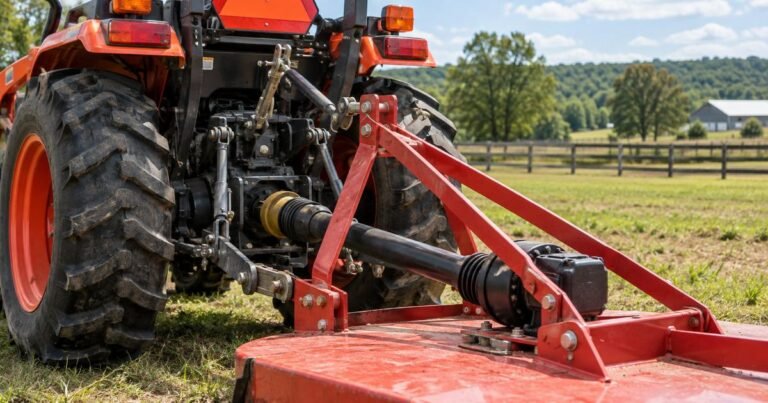
Check hitch category, PTO horsepower, hydraulic flow, implement weight, and driveline geometry.
Transport and Storage
Subcompact tractors fit smaller trailers and garages more easily. Compact machines may require a heavier trailer and tow vehicle once a loader and implements are included.
Measure actual transport weight and dimensions before buying.
Practical Buying or Ownership Checklist
- Measure gates and storage height.
- List loader jobs and heaviest expected loads.
- Choose mower or cutter type.
- Compare tractor and loader weight.
- Check implement PTO and hitch requirements.
- Test-drive both classes back-to-back.
Our tractor sizing guide can help narrow the choice further.
Loader Differences Matter More Than Many Buyers Expect
Subcompact loaders are useful for mulch, soil, snow, manure, and light material handling. Compact tractors usually offer more lift height, more capacity, and a heavier chassis, which becomes important when using pallet forks or moving logs.
Compare lift capacity at the same point and height. Also remember that a quick-attach frame, bucket, or fork carriage uses part of the loader’s rated capacity. The load center matters because a pallet carried far forward places more leverage on the loader.
Ground Clearance and Rough Terrain
Subcompact tractors sit lower to the ground. That helps with stability and mowing, but it can become a limitation in woods, brush, deep snow, ruts, and uneven trails.
Compact tractors generally provide more clearance under axles, steps, and the chassis. If you expect to cross rough ground often, measure the lowest points on both tractor classes rather than judging by tire size alone.
Three-Point Hitch and PTO Differences
Both classes can use rear implements, but subcompact tractors may have limited three-point geometry, lower lift height, and less PTO horsepower. That can restrict the size of rotary cutters, tillers, box blades, and other attachments.
Check the exact implement you want before buying the tractor. A machine can have the correct hitch category and still be too light or underpowered for a particular attachment.
Mowing Quality and Lawn Damage
Subcompact tractors are often better suited to finished lawns because they are lighter and commonly support mid-mount mower decks. With turf tires, they can replace a large lawn tractor while adding loader and hitch capability.
A compact tractor can mow well, but greater weight can leave marks on soft soil. If lawn appearance is important, consider tire type, soil moisture, tractor weight, and whether you really need a heavier machine for other jobs.
Storage, Trailering, and Daily Convenience
Subcompacts fit smaller garages, gates, trailers, and parking areas. They are also easier to maneuver around landscaping and buildings.
Compacts require more space, but their extra capability can reduce the number of trips and passes needed for many jobs. Choose the size you will enjoy using every week, not just the one with the largest specifications.
Resale and Long-Term Needs
Think about the property five years from now. If you plan to add fencing, livestock, a longer driveway, firewood work, or more acreage, a compact tractor may provide more room to grow.
If the property is already finished and the work will remain light, a subcompact can be easier and cheaper to own. The better tractor is the one that fits the real workload, not the category that sounds more capable.
Comfort and Operator Fatigue
Small tractors are often used for several hours at a time, so seat quality, pedal layout, steering effort, vibration, and control placement deserve attention. A subcompact that fits a smaller operator perfectly may feel cramped to someone taller, while a compact can provide more platform space.
Loader joystick placement and hydrostatic pedal design also vary by brand. Test-drive both classes long enough to use the controls repeatedly. Comfort can affect how safely and accurately you work after several hours.
Cost Beyond the Tractor
A compact tractor may require a heavier trailer, larger implements, more storage space, and sometimes a larger tow vehicle. Those costs can outweigh the tractor’s purchase-price difference.
Subcompact attachments are often smaller and easier to store, but the smaller working width can increase job time. Compare the complete ownership package rather than only the base tractor price.
A Simple Decision Rule
If most of your work is mowing, landscaping, light snow, and small material handling near the house, start by testing a subcompact. If regular jobs include logs, gravel, rough terrain, pallet forks, larger rotary cutters, or heavier grading, start with a compact.
Then compare the exact loader, PTO, hydraulic, and weight specifications instead of relying only on the class name.
Snow Removal Differences
Subcompact tractors can handle residential snow removal well with a front blade, rear blade, or snow blower. Their small size helps around driveways and parked vehicles.
Compact tractors provide more weight and ground clearance, which can help in deep snow or on long gravel lanes. Tire chains, ballast, and cab comfort can matter as much as tractor class.
Backhoe Use
Both subcompact and compact tractors may offer backhoe attachments. Compact models generally provide more digging depth, reach, and stability, while subcompact backhoes are useful for drainage, small stumps, trenches, and landscaping.
If backhoe work is occasional, renting an excavator may be more cost-effective than owning the attachment. Compare purchase price, storage, installation time, and how often you will actually dig.
Before signing, sit on both tractor classes and operate the loader, three-point hitch, PTO controls, and transmission. A short hands-on comparison can reveal fit and visibility differences that specifications do not show.
FAQs: Subcompact vs Compact Tractor
Q. Is a subcompact tractor enough for 5 acres?
A. It can be when work is mostly mowing, gardening, snow clearing, and light loader use. Heavier work may favor a compact tractor.
Q. Can a compact tractor mow a lawn?
A. Yes, but weight and tire choice can affect turf. A subcompact may be easier around finished landscaping.
Q. Which is better for pallet forks?
A. Compact tractors usually provide more loader height and capacity, although exact specifications matter more than category labels.
Conclusion
In a subcompact vs compact tractor decision, choose subcompact for maneuverability and lighter property work, and compact for greater weight, ground clearance, loader performance, and attachment capability.
Disclaimer: Tractor classifications are not perfectly standardized. Compare the exact manufacturer specifications and operating limits.