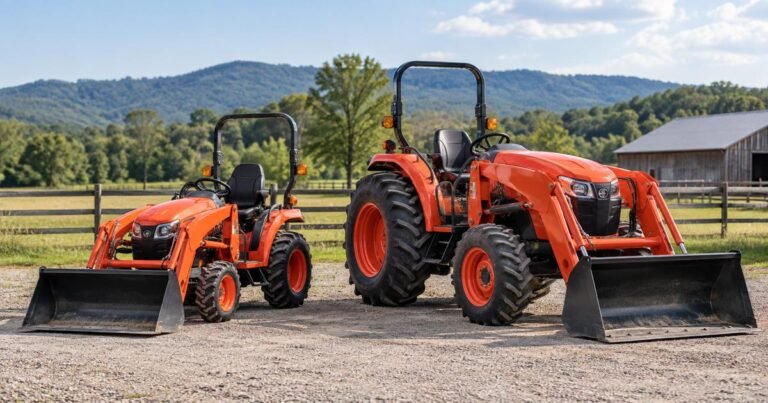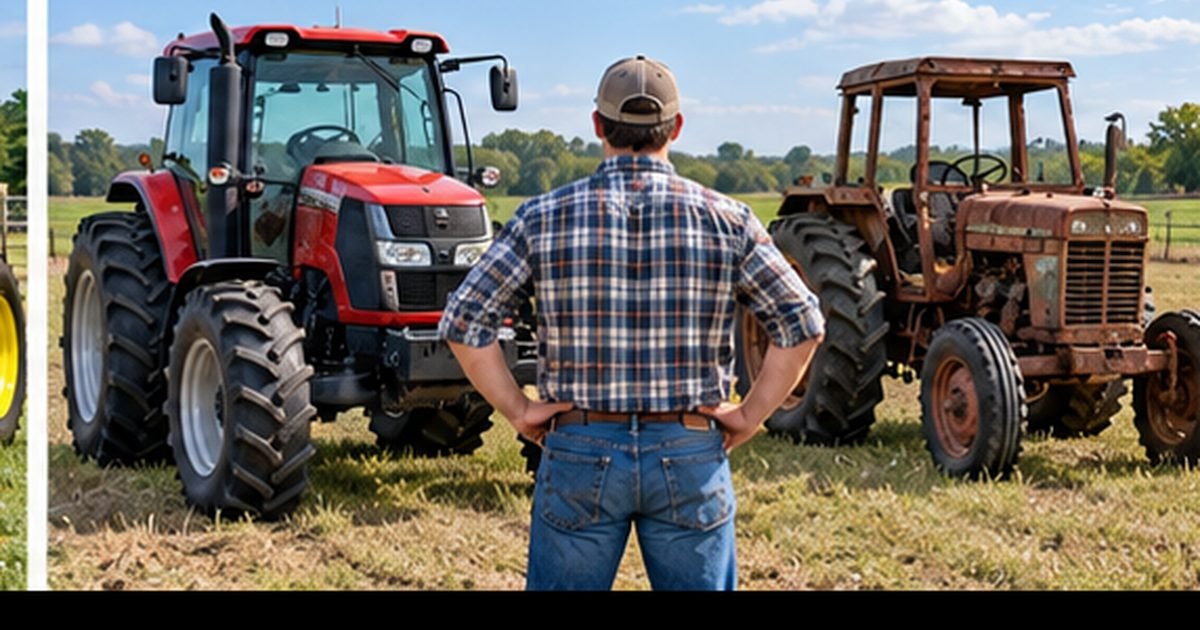
New vs Used Tractor: Which Should You Buy?

New vs used tractor comes down to risk, budget, warranty, condition, and how urgently you need dependable uptime. A new tractor usually offers warranty protection and predictable condition. A used tractor can reduce purchase cost, but inspection quality matters much more.
For many property owners, the better value is not simply the cheaper machine. It is the tractor that performs the required work with manageable ownership risk.
New vs Used Tractor: Main Tradeoffs
| Factor | New Tractor | Used Tractor |
|---|---|---|
| Purchase price | Usually higher | Often lower |
| Warranty | Usually included | May be limited or expired |
| Condition | Known | Depends on history |
| Financing | Dealer programs may be available | Terms vary |
| Technology | Current features | Can be simpler |
| Inspection risk | Lower | Higher |
Reasons to Buy New
New tractors are attractive when downtime is costly or when you want predictable ownership. Warranty coverage can reduce the financial impact of certain early failures.
- Factory warranty
- No unknown prior abuse
- Current safety and convenience features
- Dealer setup and support
- Access to current attachments
- Potential promotional financing
The downside is higher purchase cost and initial depreciation. Newer emissions and electronic systems can also add complexity compared with older mechanical tractors.
Reasons to Buy Used
A good used tractor can provide excellent value, especially when the model has strong parts support and a clear maintenance history.
Older tractors can also appeal to owners who prefer simpler mechanical systems. However, age alone does not guarantee simplicity or easy repair.
Hours Matter, but Condition Matters More
Engine hours are useful, but they do not tell the whole story. A well-maintained tractor with more hours can be a better purchase than a low-hour tractor that sat outside, was poorly serviced, or performed heavy loader work without maintenance.
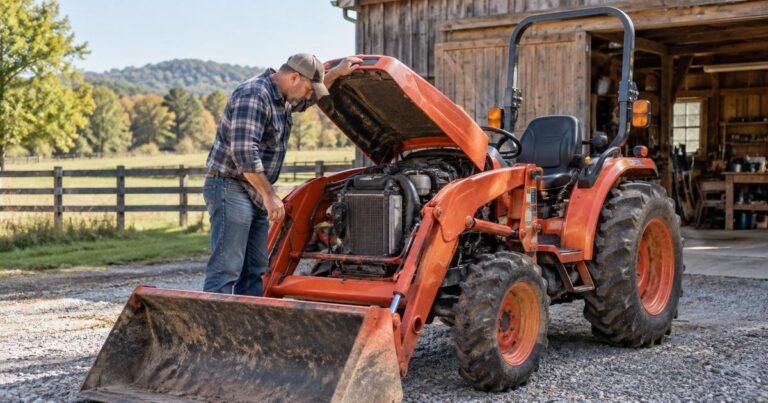
Look for records, fluid condition, cold-start behavior, leaks, tire wear, steering play, hydraulic response, PTO operation, and loader-pin wear.
Used Tractor Inspection Checklist
- Inspect cold before the seller starts it.
- Check engine oil, coolant, and hydraulic fluid.
- Look for leaks and fresh cleanup around seals.
- Start the tractor and watch exhaust smoke.
- Test every gear or hydrostatic range.
- Operate the PTO.
- Raise the loader and three-point hitch.
- Check steering, brakes, and parking brake.
- Inspect tires and rims.
- Check hour meter consistency with wear.
- Verify serial number and ownership.
- Confirm parts and dealer support.
Attachments Can Change the Value
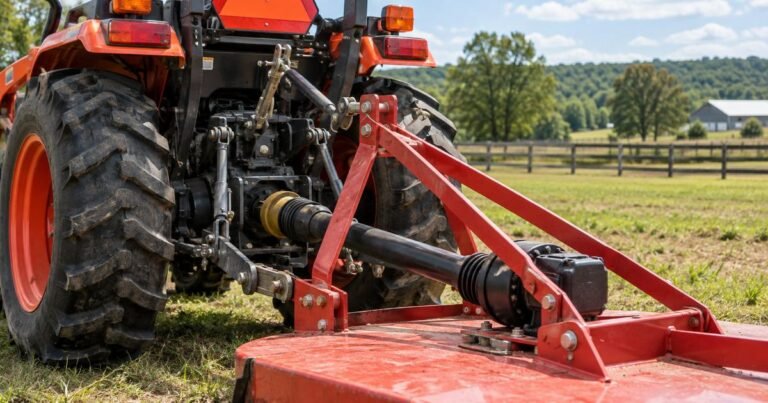
A tractor package with a loader, mower, box blade, or backhoe can be worth more than the tractor alone, but only if the attachments fit your work and are in good condition.
See our compact tractor attachments guide before paying extra for tools you may not use.
Financing vs Cash Price
Do not compare only sticker prices. New-tractor promotional financing can change monthly cost, while a lower used price may require cash or a higher-rate loan.
Compare total financing cost, insurance, taxes, transport, immediate service, and attachment needs.
Which Buyer Fits New Best?
New can make sense if you depend on the tractor for income, cannot tolerate downtime, want current features, or prefer dealer-backed warranty support.
Which Buyer Fits Used Best?
Used can be attractive if budget is limited, you can inspect equipment carefully, you have access to repairs, and you find a well-supported model with maintenance records.
If you are still deciding on size, start with our tractor sizing guide.
Start With the Job List, Not the Tractor Age
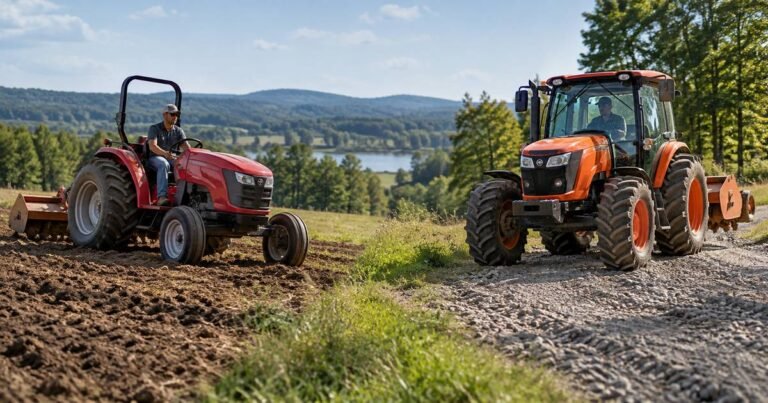
Before comparing new and used machines, write down the jobs the tractor must perform. Include mowing, loader work, snow removal, grading, tillage, material handling, and any PTO-powered implements you expect to run.
Then identify the horsepower, PTO horsepower, hydraulic flow, three-point hitch capacity, loader capability, tire type, and physical size those jobs require. A bargain used tractor is not a bargain if it cannot safely handle the implements you need.
When Buying New Makes More Sense
A new tractor can be easier for buyers who want a warranty, dealer setup, predictable maintenance history, and access to current attachments. You also know how the machine has been operated from its first hour.
New equipment can make sense when downtime would be costly or when you need a specific loader, cab, hydraulic option, tire package, or financing structure. The tradeoff is a higher purchase price and faster early depreciation.
When a Used Tractor Can Be the Better Value
A well-maintained used tractor can deliver years of useful work for less money. Older machines may also have simpler emissions or electronic systems, depending on model year and horsepower, which some owners prefer.
The key is condition, not age alone. A tractor with more hours and complete service records can be a better purchase than a low-hour machine that sat outside, was poorly maintained, or spent its life doing hard loader work.
How to Evaluate Engine Hours
There is no universal hour number that makes a tractor “too old.” Hours need context. A machine used gently for mowing is different from one that spent the same number of hours loading manure, operating a backhoe, or doing heavy tillage.
Compare the hour meter with pedal wear, seat wear, hitch wear, loader pins, tires, and service records. If the physical condition looks inconsistent with the displayed hours, investigate further.
Used Tractor Inspection Checklist
- Start the engine cold if possible and listen for abnormal noise.
- Check for fluid leaks before and after the test drive.
- Inspect engine oil, coolant, hydraulic fluid, and visible hoses.
- Cycle the loader and three-point hitch through their ranges.
- Test PTO engagement according to the seller’s instructions.
- Drive in every available range or gear and test forward and reverse.
- Check steering, brakes, four-wheel drive, and differential lock.
- Inspect loader pins, bucket edges, hitch balls, and drawbar for wear.
- Look for cracked welds, bent sheet metal, or evidence of rollover damage.
Attachments Can Change the Real Purchase Price
Compare tractors as complete working packages. A used tractor that includes the correct loader, bucket, mower, rear blade, or forks may offer more value than a cheaper bare tractor that requires thousands of dollars in attachments later.
At the same time, do not overpay for implements you will not use. Check whether the attachments fit the tractor correctly and whether replacement wear parts are readily available.
Dealer Support and Parts Availability
For both new and used tractors, local parts and service support can matter more than a small difference in purchase price. Ask how quickly common filters, belts, hydraulic parts, sensors, and loader components can be obtained.
If you are considering an older or discontinued model, verify parts availability before buying. A mechanically sound tractor can become frustrating if an ordinary repair requires hard-to-find components.
Financing, Warranty, and Total Ownership Cost
Do not compare only the advertised purchase prices. New tractors can come with warranty coverage and promotional financing, while used tractors may require a larger cash payment or higher-rate financing.
Estimate insurance, maintenance, tires, fluids, attachments, transportation, and likely repairs. A used tractor with neglected tires and overdue service can consume the price difference quickly.
A Simple Decision Rule
Buy new when you value warranty coverage, predictable history, dealer support, and exact configuration enough to justify the premium. Buy used when you can inspect confidently, the model has strong parts support, and the price leaves room for maintenance or repairs.
Whichever route you choose, match the tractor to the work first. The best purchase is not automatically the newest machine or the cheapest one. It is the tractor that can perform your regular jobs safely without forcing an upgrade a year later.
FAQs: New vs Used Tractor
Q. How many hours are too many on a used tractor?
A. There is no universal cutoff. Model, maintenance, workload, storage, and repair history matter more than a single hour number.
Q. Is a used tractor from a dealer safer than private sale?
A. A dealer may offer inspection, limited warranty, or service history, but you should still inspect the tractor and understand any warranty terms.
Q. Should I pay for a pre-purchase inspection?
A. For an expensive used tractor or one with uncertain history, an independent inspection can be worthwhile.
Conclusion
In a new vs used tractor decision, buy new for lower uncertainty and warranty support. Buy used when condition, history, price, and parts support line up in your favor.
Disclaimer: This article provides general educational information. Equipment condition and market value vary. Consider a qualified inspection before buying used machinery.