10 Best Compact Tractor Attachments for Property Owners

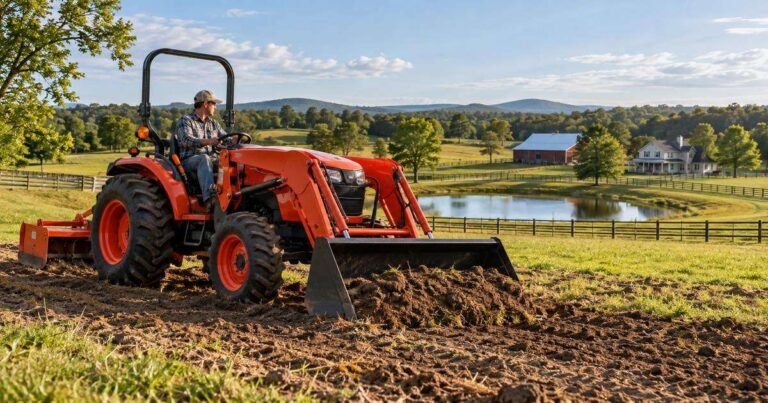
The best compact tractor attachments are the ones that match your property and recurring jobs. For many US property owners, a front loader, pallet forks, box blade, rotary cutter, grapple, rear blade, post-hole digger, snow-removal tool, tiller, and quick hitch provide the broadest year-round usefulness.
You do not need to buy every attachment at once. Start with the jobs you do most often, confirm that each implement matches your tractor’s PTO horsepower, hydraulic capacity, hitch category, loader limits, and weight, then add tools as your workload grows.
Best Compact Tractor Attachments for Property Owners
Compact tractors are valuable because one machine can do many different jobs. Kubota and John Deere both offer broad implement ranges for mowing, material handling, grading, snow work, landscaping, and property maintenance. You can also see how those tools fit into everyday ownership in our compact tractor property-maintenance guide.
The right attachment can save hours of manual work. The wrong one can be expensive, awkward, or unsafe. Compatibility matters more than brand popularity.
1. Front Loader and General-Purpose Bucket
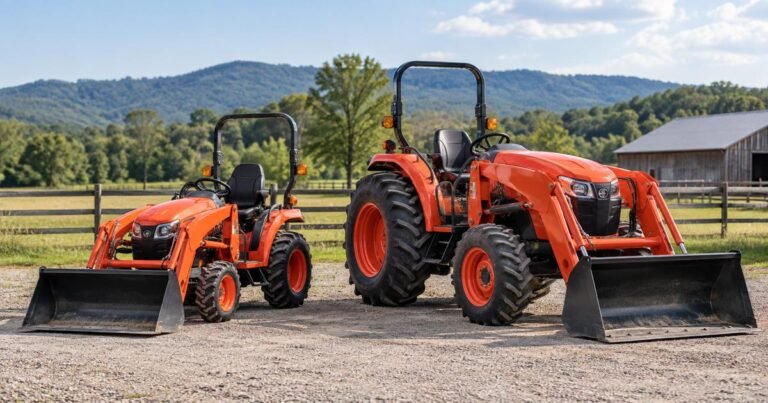
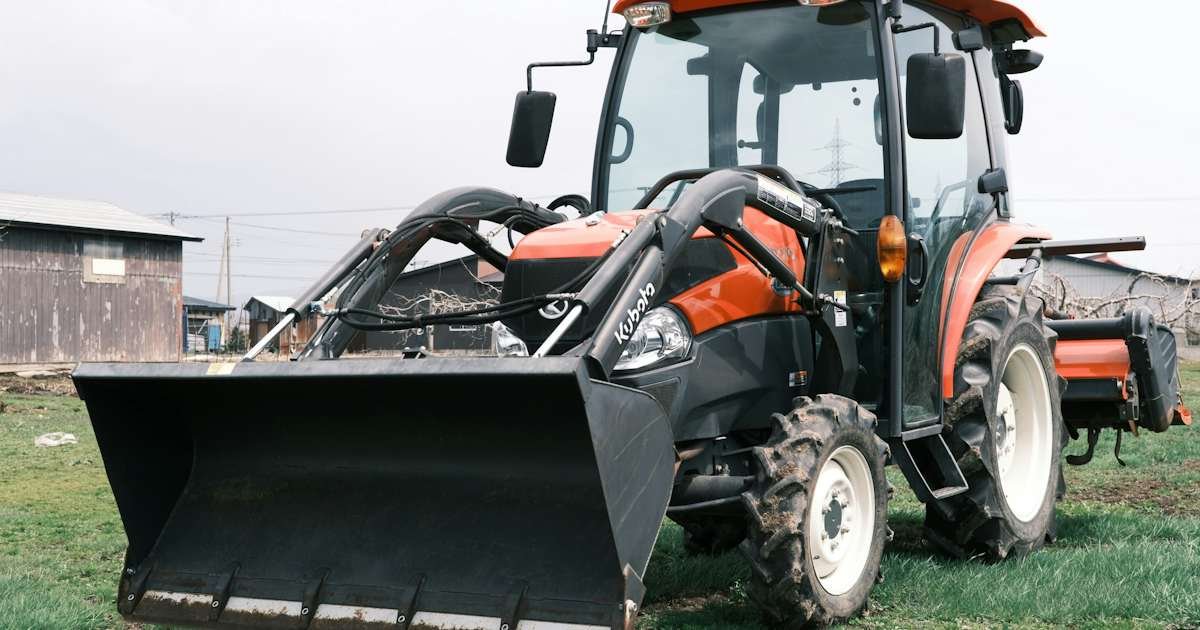
A front loader is often the first attachment new owners want because it handles so many jobs. A standard bucket can move mulch, soil, gravel, manure, snow, and loose debris.
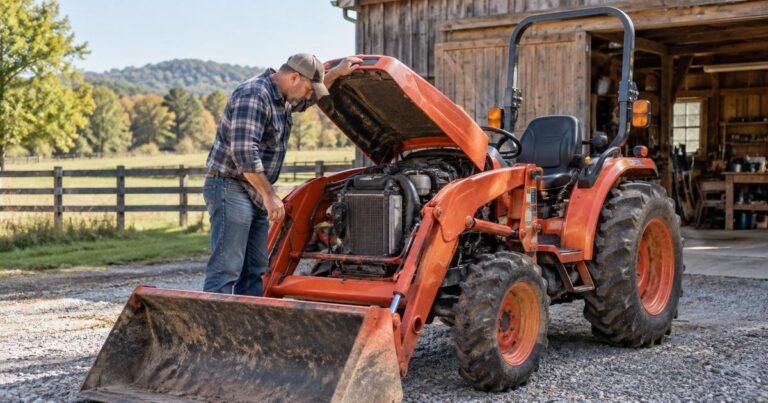
Loader capacity varies by tractor and by the point where the manufacturer measures the load. Do not assume a tractor can safely lift a load just because it fits in the bucket. Check the rated capacity, axle limits, tire limits, and ballast instructions in the operator’s manual.
Proper rear ballast can improve stability during loader work. Keep the bucket low while traveling and avoid turning with a raised load.
2. Pallet Forks
Pallet forks turn a compact tractor into a useful material-handling machine. They can move pallets, lumber, logs, fence materials, bags, and other bulky items that are awkward in a bucket.
John Deere lists adjustable pallet-fork options across several compact tractor loader systems. The important number is not just loader lift capacity. You must also subtract the weight of the fork frame and account for how far the load sits in front of the pivot point.
Keep loads centered and secured. Long objects can shift the tractor’s center of gravity quickly.
3. Box Blade
A box blade is one of the most useful rear implements for gravel driveways, paths, building pads, and light grading. It can cut high spots, carry material, and fill low areas.
Kubota specifically recommends box blades for driveway repair, drainage shaping, and trail maintenance. A box blade works best when the tractor has enough weight and traction to pull it without constant wheel spin.
Many box blades include scarifier teeth that can loosen packed gravel or soil before the cutting edges redistribute it.
4. Rotary Cutter
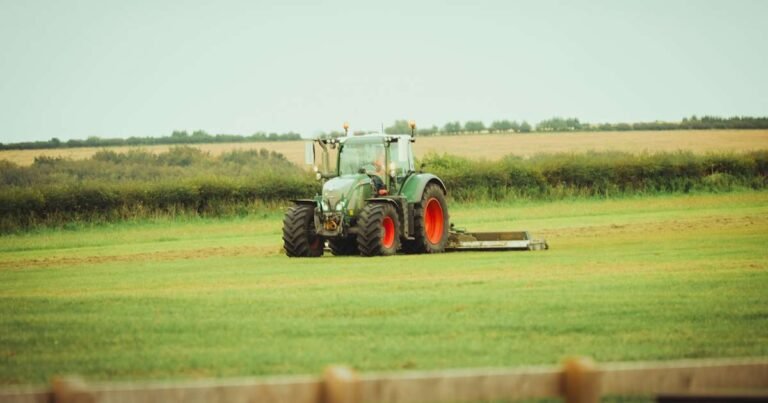
A rotary cutter is designed for tall grass, weeds, and light brush that would overwhelm a finish mower. It is a common choice for fields, trails, fence lines, and rough acreage.
Match cutter width and PTO horsepower to the tractor. A cutter that is too large can overload the PTO, make the tractor unstable, or be difficult to control on hills.
Always inspect the area first for rocks, wire, stumps, and other hidden hazards. Rotary cutters can throw debris with significant force.
5. Grapple
A grapple is extremely useful for brush, storm cleanup, logs, roots, demolition debris, and irregular materials that will not stay in a normal bucket.
Kubota highlights grapples for tree and storm-debris removal, while John Deere offers root, debris, and pallet-fork grapple configurations for compact loaders.
Many hydraulic grapples require a third-function hydraulic circuit on the loader. Add that cost when comparing setups.
6. Rear Blade
A rear blade is a simple, versatile tool for light grading, snow, drainage shaping, and maintaining gravel lanes. Unlike a box blade, it can often be angled to move material to one side.
Rear blades are especially useful for crowning driveways and shaping drainage. They are not always as aggressive as a heavy box blade for repairing deep ruts, so many property owners eventually use both.
7. Post-Hole Digger
A PTO-driven post-hole digger can save substantial time when building fences, installing gates, planting trees, or setting posts for small structures.
Choose an auger diameter that matches the job and make sure the tractor has the correct PTO and three-point-hitch compatibility.
Underground utilities are a major hazard. Before digging, contact the appropriate utility-locating service and follow local requirements.
8. Snow Blade or Snow Blower
If you live in an area with regular snow, a compact tractor can become a year-round machine with the right snow attachment.
A blade is usually simpler and faster for pushing moderate snow. A snow blower can be better when snowbanks build up or when you need to move snow farther away from a driveway.
Kubota lists rear snow blowers among the common implements for property-maintenance tractors. Consider cab comfort, tire choice, chains, ballast, visibility, and cold-weather starting when setting up a winter tractor.
9. Rotary Tiller
A rotary tiller is useful for gardens, food plots, seedbeds, and other soil-preparation work. It can break and mix soil much faster than hand tools.
Tillers place a sustained load on the PTO, so tractor horsepower and tiller width must be matched carefully. Soil type also matters. Hard, rocky, or root-filled ground can require slower travel and multiple passes.
Before tilling, remove large rocks and identify buried utilities, irrigation, or other obstacles.
10. Quick Hitch
A quick hitch does not perform a property-maintenance job by itself, but it can make three-point implements easier to connect and remove.
Kubota calls a quick hitch a major time saver for compact tractor owners who change non-powered rear implements frequently.
Not every implement fits every quick hitch without adjustment or an adapter. Check hitch category, pin spacing, driveline clearance, and top-link geometry before buying.
Which Attachments Should You Buy First?
The best purchase order depends on your property. A useful approach is to rank attachments by how often they will be used rather than by how impressive they look.
| Main Job | Good First Attachment to Research |
|---|---|
| Material moving | Loader bucket and pallet forks |
| Gravel driveway | Box blade or grading scraper |
| Brush and rough field mowing | Rotary cutter |
| Storm debris and logs | Grapple |
| Fencing | Post-hole digger |
| Heavy winter snow | Snow blower or blade |
| Garden and food plots | Rotary tiller |
If you are unsure, start with the loader and one rear implement tied to your most common job. You can add more tools after learning what your property actually demands.
Attachment Compatibility Checklist
- Confirm your tractor model and exact loader model.
- Check three-point hitch category.
- Verify PTO speed and available PTO horsepower.
- Check required hydraulic flow and number of remote valves.
- Confirm loader lift capacity and attachment weight.
- Check tractor and implement width.
- Review ballast requirements.
- Confirm tire and axle load limits.
- Read the implement operator’s manual before use.
Do not assume an attachment is safe simply because it can physically connect to the tractor. Proper matching includes weight, power, hydraulics, geometry, and operating limits.
Used Attachments Can Be a Good Value
Simple implements such as rear blades, box blades, and some pallet forks can last for years if they are not bent, cracked, or heavily worn.
Inspect welds, pins, cutting edges, gearboxes, PTO shafts, hydraulic cylinders, hoses, and attachment points before buying used equipment.
For powered attachments, parts availability matters. A cheap used implement can become expensive if the gearbox, driveline, or replacement blades are difficult to source.
Safety Matters With Every Attachment
Attachments change a tractor’s weight distribution, turning radius, width, and center of gravity. Read the tractor and implement manuals together.
Never allow riders on implements. Keep bystanders clear, use guards and shields, lower implements before service, and shut the tractor down before approaching moving parts.
Sources: Kubota compact tractor attachment guidance, Kubota implement-by-task guide, and current manufacturer compatibility information for your specific tractor.
FAQs: Best Compact Tractor Attachments
Q. What is the most useful compact tractor attachment?
A. For many property owners, the front loader is the most versatile because it can move soil, gravel, mulch, snow, and other loose material. The best attachment still depends on your property.
Q. Should I buy pallet forks or a grapple first?
A. Choose pallet forks if you move pallets, lumber, or stacked materials often. Choose a grapple first if your main work is brush, logs, storm debris, or irregular loads.
Q. Does every grapple need a third-function valve?
A. Many hydraulic grapples do, but designs vary. Confirm the hydraulic requirements of the exact grapple and loader before buying.
Q. Can any Category 1 implement fit any Category 1 tractor?
A. Not necessarily. Hitch category is only one compatibility factor. PTO power, implement weight, driveline length, hydraulic needs, and tractor capacity also matter.
Conclusion
The best compact tractor attachments are the ones that solve your most frequent property-maintenance problems. A loader, pallet forks, box blade, rotary cutter, grapple, and a few task-specific rear implements can turn one compact tractor into a highly versatile machine.
Before buying, rank your jobs, verify compatibility, and choose attachments that your tractor can operate safely within its published limits.
Disclaimer: This article provides general educational information. Attachment compatibility, hydraulic requirements, ballast, PTO needs, and safe operating limits vary by tractor and implement. Follow both manufacturers’ specifications and operator manuals before use.