Box Truck vs Semi Truck: Key Differences Explained

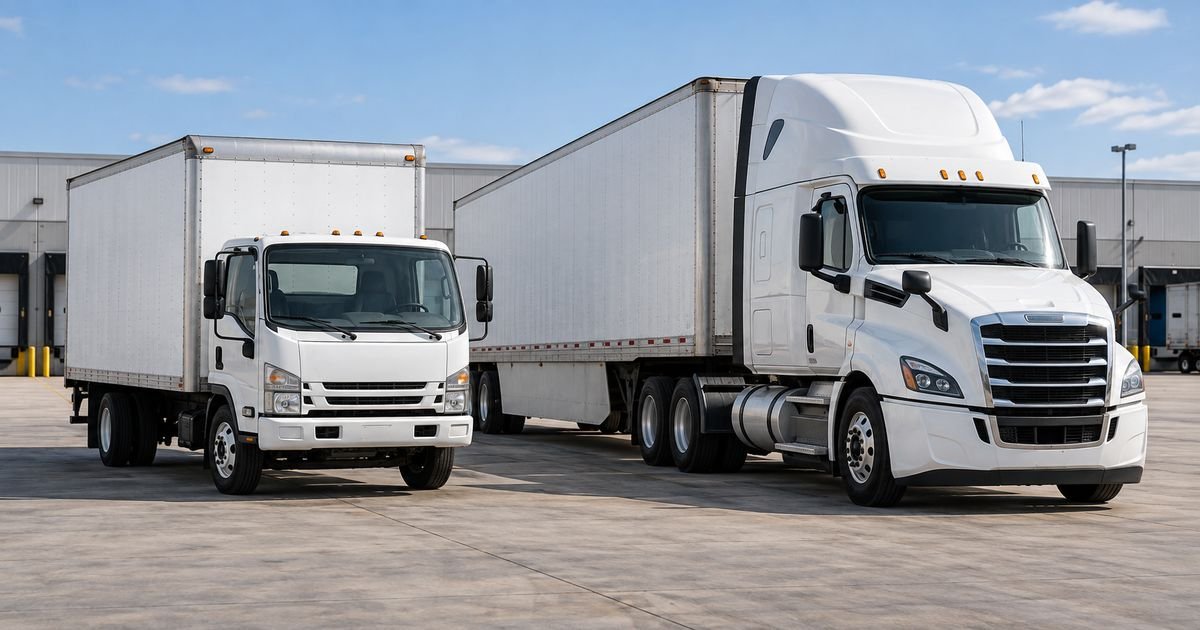
Box truck vs semi truck compares a single-chassis straight truck with a tractor and separate semitrailer. Box trucks are simpler and more maneuverable, while semis provide much more freight capacity and trailer flexibility.
The right vehicle depends on route length, cargo volume, dock access, driver licensing, and business model.
Box Truck vs Semi Truck: Main Difference
A box truck carries its enclosed cargo body on the same chassis as the cab and engine. A semi truck uses a tractor to pull a separate semitrailer.
This difference changes maneuverability, freight capacity, loading, maintenance, licensing, and fleet operations.
Cargo Capacity
Semi trailers provide much more cargo floor space and volume than typical box trucks, making them the standard for long-distance high-volume freight.
Box trucks are better suited to smaller loads, local deliveries, moving, appliances, furniture, and routes where a tractor-trailer is inconvenient.
Maneuverability
A straight box truck has no articulation point, so backing and turning are simpler for beginners. A semi requires more skill because the trailer pivots independently.
Large box trucks still need wide turns and careful height awareness.
CDL Requirements
Heavy box trucks commonly fall under Class B rules. Tractor-trailer combinations typically require Class A when federal weight definitions apply.
See our box truck CDL guide and CDL career guide.
Trailer Flexibility
A major semi advantage is the ability to drop one trailer and connect another. The tractor can keep working while a trailer is being loaded or unloaded.
A box truck’s body stays with the chassis, which is simpler but less flexible for high-volume fleet operations.
Operating Costs
Semi trucks generally cost more to purchase, fuel, insure, maintain, and operate. They also require more space and specialized driver training.
Box trucks can offer a lower entry point for local delivery businesses, although larger models still have meaningful maintenance and insurance costs.
Best Use Cases
- Box truck: local delivery, moving, appliances, furniture, event logistics, regional freight.
- Semi truck: long-haul freight, large palletized loads, drop-and-hook operations, national distribution.
Freight Type Changes the Best Choice
Box trucks are well suited to mixed local freight, furniture, appliances, moving, and deliveries where the driver needs direct access to cargo throughout the route. Semitrailers are better for larger pallet counts, full truckload freight, and operations built around loading docks.
The vehicle should match the freight contract. A business that routinely moves only half a box truck of cargo gains little from owning a semi. A business that turns away large loads because a box truck is too small may need the capacity and trailer flexibility of a tractor-trailer.
Driver Licensing and Hiring
Many semi-truck jobs require a Class A CDL. Heavy straight box trucks may require a Class B CDL, while lighter box trucks can sometimes operate without a CDL when no other CDL rule applies.
That difference affects recruiting. Class A drivers may command different pay, training, and insurance requirements than drivers operating lighter straight trucks.
Docking and Customer Access
Semitrailers are efficient at warehouses designed for 53-foot trailers. Drop-and-hook operations let a tractor leave one trailer while another is loaded, improving equipment utilization.
Box trucks can reach customers that cannot accept a full tractor-trailer. Retail stores, homes, offices, events, and small commercial sites may be easier to serve with a straight truck, especially when it has a liftgate.
Maintenance and Downtime
A semi operation maintains both tractor and trailer systems, including brakes, tires, suspension, lighting, coupling equipment, and trailer bodies. A box truck combines the cargo body and chassis into one vehicle, which simplifies fleet structure but means the entire vehicle may be unavailable when the chassis is in the shop.
Trailer interchangeability gives larger fleets flexibility during maintenance. Small fleets may prefer the simplicity of a straight truck even if it offers less freight capacity.
Parking and Storage
Tractor-trailers require more secure parking and maneuvering space. Box trucks can often be stored in smaller commercial lots, although large 26-foot models still need substantial room.
Before buying either, check local parking restrictions, yard access, overnight security, and whether the business location can accommodate the vehicle safely.
Operating Radius
Box trucks are common on local and regional routes where the driver makes multiple deliveries and returns to a terminal or home base. Semis dominate long-haul freight because they move much larger loads efficiently over highway miles.
A business that rarely travels beyond one metro area may gain little from tractor-trailer capacity. A carrier moving full truckload freight between distribution centers may quickly outgrow straight-truck volume.
Trailer Flexibility
A semi tractor can pull different trailers, including dry vans, refrigerated trailers, flatbeds, and specialized equipment. That gives fleets flexibility when freight types change.
A box truck’s body is permanently attached to the chassis. It is simpler, but the vehicle cannot switch from a dry box to another trailer type without changing vehicles.
Loading Dock Efficiency
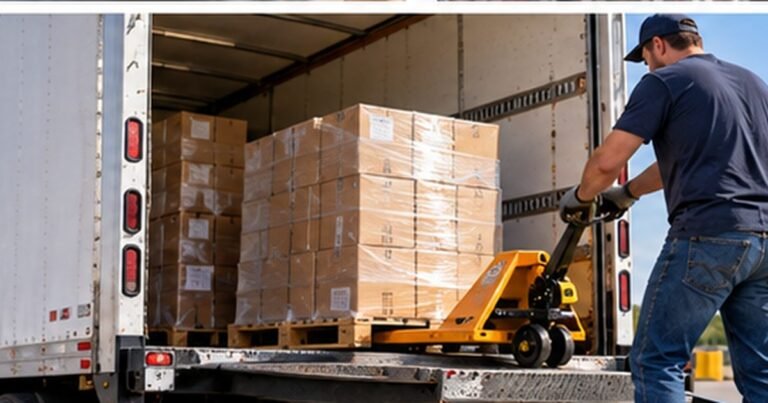
Distribution centers are often designed around standard semitrailer dock heights and dimensions. That allows forklifts to move pallets quickly in and out.
Box trucks may require ramps, liftgates, dock plates, or different door heights. For frequent warehouse work, confirm dock compatibility before selecting a fleet.
Fuel and Utilization
A semi consumes more fuel in absolute terms, but it can move much more freight. Cost per mile alone does not tell the whole story. Compare cost per pallet, ton, or completed load.
A half-empty semi can be less efficient than a well-utilized box truck. A box truck making three trips for freight that fits in one trailer can be less efficient in the opposite direction.
Startup Cost for Small Businesses
Box trucks generally provide a lower barrier to entry for moving, delivery, and local freight businesses. Semis add tractor, trailer, parking, licensing, maintenance, and often higher insurance complexity.
Choose the smallest platform that can handle the contracts you realistically expect, while leaving enough capacity for growth.
Insurance and Compliance Complexity
Both vehicle types can be subject to commercial insurance, DOT, maintenance, driver-qualification, and hours-of-service requirements depending on weight and operation. A tractor-trailer fleet usually adds more complexity because the driver, tractor, and trailer all need to be managed as a system.
Before expanding from box trucks into semis, price insurance and confirm the operating authority, registration, driver licensing, inspection, and recordkeeping requirements that apply to your business.
Weather and Handling
Long tractor-trailers are more affected by crosswinds, trailer swing, and large stopping distances. Box trucks are shorter but can still have tall bodies that react strongly to wind.
Driver training should match the vehicle. Moving from a light straight truck to a loaded combination requires new habits for turns, backing, following distance, and downhill speed control.
Customer Experience
A smaller box truck can often park closer to a customer’s door, reducing carrying distance for furniture and appliances. A semi is efficient when the customer has a dock and forklift but can be impractical for residential or small retail delivery.
Choose the vehicle that fits the customer’s receiving environment as well as the freight volume.
For a growing fleet, review the decision again when freight volume, customer type, or operating radius changes.
Recheck the choice as your routes and freight mix evolve.
FAQs: Box Truck vs Semi Truck
Q. Is a box truck easier to drive?
A. Generally yes because it is a single chassis, but large box trucks still require commercial-vehicle awareness.
Q. Can a box truck do interstate freight?
A. Yes, if the carrier and driver meet applicable federal and state requirements.
Q. Which makes more sense for a new business?
A. It depends on freight contracts, route length, load size, driver qualifications, and available capital.
Conclusion
Choose a box truck for simpler local and regional delivery, and a semi truck when maximum freight capacity, trailer interchangeability, and long-haul efficiency are required.
Disclaimer: Licensing, carrier, insurance, and operating rules vary by vehicle and operation. Verify current requirements before use.