What Is GCWR on a Truck? Gross Combination Weight Explained

GCWR on a truck means Gross Combination Weight Rating. It refers to the maximum combined operating weight assigned to the tow vehicle, trailer, cargo, passengers, and other load within the manufacturer’s rating system.
GCWR becomes important whenever a truck tows a trailer because the truck and trailer must be considered together, not as separate weight problems.
What Is GCWR on a Truck?
GCWR is different from GVWR. GVWR applies to a single vehicle, while GCWR applies to the truck-and-trailer combination.
Manufacturers determine ratings from chassis, drivetrain, brakes, cooling, axles, tires, and other engineering limits.
GCWR vs GVWR
GVWR is the maximum loaded rating assigned to the truck itself. GCWR covers the entire combination.
A truck can be below its GVWR and still exceed GCWR if the trailer is too heavy.
How to Calculate Actual Combination Weight
The actual combination weight is the scale weight of the loaded truck plus the loaded trailer. This includes fuel, occupants, tools, cargo, and equipment.
Compare actual weights with GCWR, GVWR, trailer GVWR, axle ratings, hitch ratings, and tire limits.
Tongue Weight Still Loads the Truck
Trailer tongue or pin weight is carried by the tow vehicle and contributes to truck axle and GVWR limits.
That means towing capacity is not simply GCWR minus curb weight. Payload and axle ratings can become the limiting factor first.
Why GCWR Matters for Business Trucks
Contractors and delivery businesses often add trailers for equipment, materials, or extra cargo. Towing can affect licensing, insurance, vehicle wear, and commercial regulations.
Check the complete combination before accepting a job that adds a heavy trailer.
GCWR and CDL Rules
Federal Class A CDL definitions consider combination ratings and the trailer threshold. A combination at or above 26,001 pounds with a towed unit over 10,000 pounds can fall into Class A territory when the federal definition applies.
Use FMCSA and state CDL guidance rather than relying on a towing advertisement.
Also read our GVWR guide.
GCWR Is Only One Towing Limit
A truck can be under GCWR and still be overloaded somewhere else. The truck’s GVWR, front and rear GAWR, tire capacity, hitch rating, trailer GVWR, and tongue or pin weight all remain important.
The lowest applicable limit controls. If the hitch is rated below what the truck’s powertrain could theoretically tow, the hitch becomes the practical limit.
Payload Often Limits Towing First
Trailer tongue weight presses down on the truck. Fifth-wheel or gooseneck pin weight can be substantial. That load uses available payload and increases axle weight.
A truck may have enough GCWR for a heavy trailer yet run out of rear-axle or payload capacity once passengers, tools, fuel, and hitch equipment are included.
Actual Combination Weight Should Be Verified
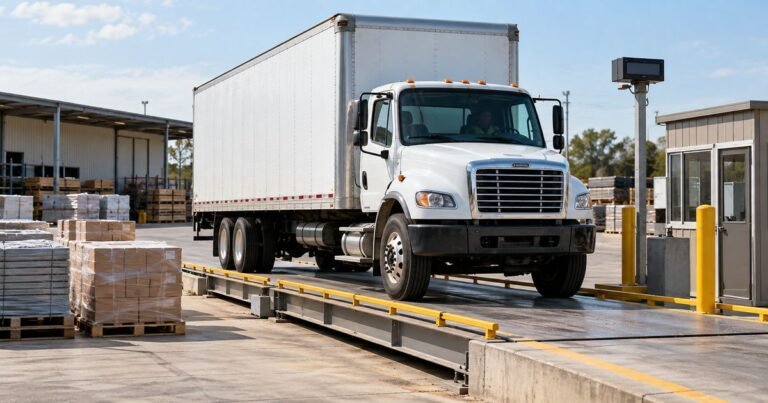
When towing near the limits, use a suitable certified scale to measure truck and trailer together and, when possible, individual axles. Scale data is more reliable than estimating cargo weight from invoices or visual appearance.
Load distribution can change during a route as freight is added or removed. Commercial operators should have a consistent loading process rather than checking only once.
GCWR and Braking
Combination weight affects acceleration, braking distance, cooling load, and handling. Trailer brakes must be properly adjusted and compatible with the truck’s brake controller or air-brake system where applicable.
Do not assume a powerful engine makes an overloaded combination safe. Ratings reflect more than engine output.
Business Planning
Contractors who occasionally tow heavy equipment should verify whether their truck, trailer, license class, insurance, and registration still match the job as equipment changes.
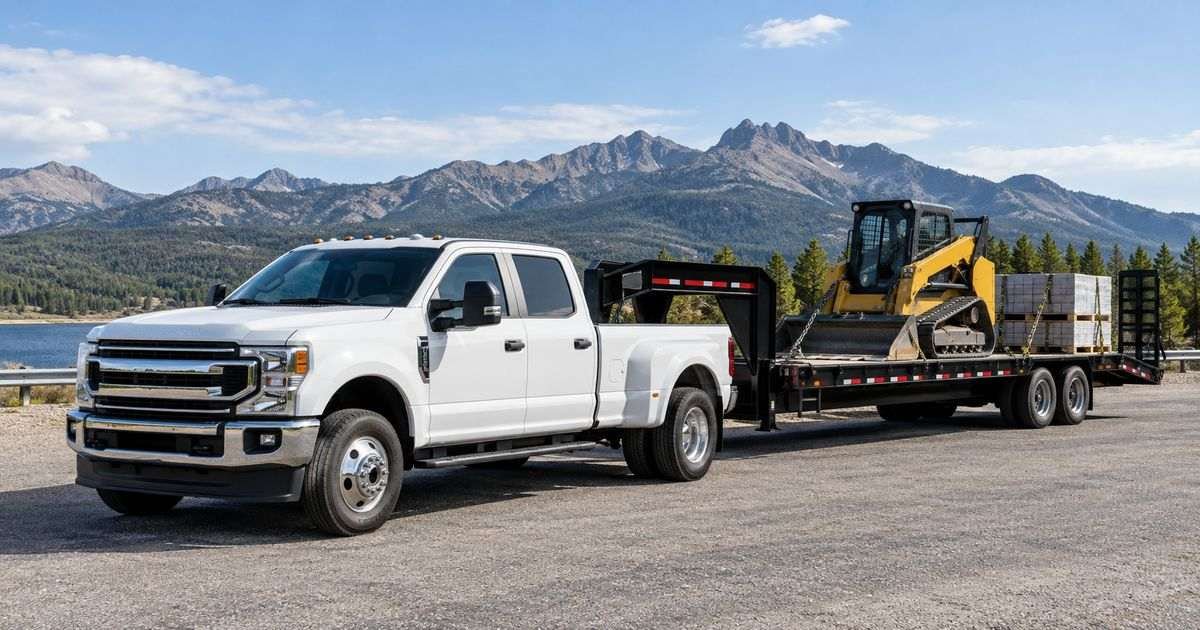
Adding a larger skid steer, excavator, or trailer can move a previously compliant combination into a different weight or licensing category.
GCWR vs Tow Rating
Tow rating is often presented as a maximum trailer figure, while GCWR limits the combined loaded weight of truck and trailer. The two are related but not interchangeable.
A heavily loaded truck leaves less room under GCWR for trailer weight. Passengers, tools, cargo, body equipment, and hitch hardware all contribute to the combination.
Tongue Weight and Pin Weight
Conventional trailers place tongue weight on the hitch, while fifth-wheel and gooseneck trailers place pin weight in or near the truck bed. That weight becomes part of the truck’s load.
Too little or too much tongue weight can also affect trailer stability. Follow trailer and hitch manufacturer guidance rather than guessing from appearance.
Scale the Combination in Working Condition
Weigh the truck and trailer with normal passengers, fuel, tools, cargo, and equipment. If possible, obtain separate steer, drive, and trailer-axle weights.
This shows whether the combination is under GCWR and whether individual axle groups remain within their own limits.
Grades and Heat
Heavy combinations place more load on the engine, transmission, cooling system, and brakes, especially on long grades. Staying under a rating does not eliminate the need for appropriate speed, gear selection, and maintenance.
Commercial operators should inspect brakes and cooling systems carefully before repeated heavy towing.
Planning Equipment Purchases
Contractors often add heavier machines over time. A trailer and truck that were appropriate for a compact skid steer may no longer be adequate after upgrading to a larger excavator.
Recalculate truck, trailer, hitch, axle, tire, and combination limits whenever the equipment package changes.
GCWR Does Not Replace Trailer Ratings
A high GCWR does not allow a trailer to exceed its own GVWR, axle ratings, tire capacity, or hitch limits. Every component still has to remain within its individual rating.
Think of GCWR as one ceiling among several, not as permission to load the combination up to one single number.
Payload Can Be the Hidden Limiter
Heavy tongue or pin weight adds directly to the truck. A combination can be comfortably below GCWR while the truck itself exceeds GVWR or rear GAWR.
This is common with heavy equipment trailers and fifth-wheel setups. Always calculate the load on the truck as well as the total combination weight.
A Practical Towing Example
Imagine a truck that weighs 10,500 pounds ready for work and a loaded trailer that weighs 12,000 pounds. The combined actual weight is 22,500 pounds. Whether that is acceptable depends on GCWR plus the truck GVWR, trailer GVWR, axle ratings, tire capacities, and hitch rating.
No one number answers the entire question. The safest approach is to verify every rating and then confirm the actual loaded combination on a scale.
Recheck Ratings After Equipment Changes
Adding a heavier trailer, larger machine, auxiliary fuel tank, toolbox, or different hitch can change the loaded combination enough to affect compliance. Do not assume a setup that worked last year still fits after equipment upgrades.
Keep a simple record of truck, trailer, hitch, and equipment weights for recurring jobs. When one component changes, recalculate the full combination and verify it on a scale if the setup operates near its limits.
For regular towing, keep the truck, trailer, hitch, and equipment specifications together with representative scale tickets. This makes it easier to verify a familiar setup before departure and to recognize when a new attachment, machine, or cargo change pushes the combination closer to a limit.
Verify every limit.
FAQs: GCWR
Q. Is GCWR the same as towing capacity?
A. No. GCWR is one rating used in towing calculations, but payload, axle, hitch, trailer, and tire limits can reduce usable towing capacity.
Q. Does trailer tongue weight count against payload?
A. Yes. Tongue or pin weight is carried by the truck and uses part of its available payload and axle capacity.
Q. Where can I find GCWR?
A. Check the vehicle owner’s manual, towing guide, manufacturer documentation, or dealer information for the exact configuration.
Conclusion
GCWR is the maximum combination rating for truck and trailer together. Safe towing requires staying within GCWR plus every other applicable vehicle, axle, hitch, tire, and trailer limit.
Disclaimer: Towing and weight ratings are configuration-specific. Follow manufacturer documentation and applicable laws.