Do You Need a CDL to Drive a Box Truck?

Do you need a CDL to drive a box truck? Not always. In the United States, many smaller box trucks can be driven with a regular driver’s license, while heavier trucks may require a commercial driver’s license. The key number is usually the vehicle’s gross vehicle weight rating, or GVWR, along with how the truck is used.
Federal CDL rules are based on vehicle weight, combination weight, passenger capacity, and certain hazardous-material operations. State rules can add requirements, so always check the licensing agency in your state before driving commercially.
Do You Need a CDL to Drive a Box Truck?
FMCSA defines a Class B CDL vehicle as a single vehicle with a GVWR or gross vehicle weight of 26,001 pounds or more, or such a vehicle towing a trailer that does not exceed 10,000 pounds GVWR or actual weight. A typical heavy straight box truck can fall into this category.
If the truck is rated below that threshold, a CDL may not be federally required unless the vehicle is used to carry certain numbers of passengers or placarded hazardous materials. That does not mean every sub-26,001-pound truck is automatically exempt from every commercial rule.
What Is GVWR?
GVWR means Gross Vehicle Weight Rating. NHTSA defines it as the value specified by the manufacturer as the loaded weight of a single vehicle. You can usually find it on the certification label inside the driver-side door area or on another manufacturer label.
GVWR is not the same as what the truck happens to weigh today. A truck can be empty and still have a GVWR high enough to require a CDL.
| Situation | Typical Federal CDL Result |
|---|---|
| Single box truck under 26,001 lb GVWR | Often no CDL, unless another CDL rule applies |
| Single box truck 26,001 lb GVWR or more | Class B CDL typically required |
| Combination 26,001 lb or more with trailer over 10,000 lb | Class A CDL may apply |
| Placarded hazardous materials | CDL and hazmat requirements may apply |
| Vehicle designed for 16 or more people including driver | Class C or higher CDL requirements may apply |
When a Class B CDL Is Usually Required
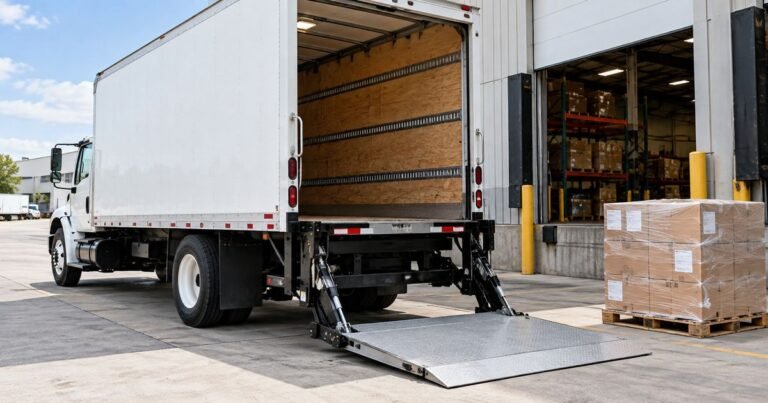
A Class B CDL commonly covers heavy straight trucks. Examples can include large box trucks, dump trucks, refuse trucks, and some large delivery vehicles when they meet the 26,001-pound threshold.
The actual license you need also depends on towing. A heavy straight truck towing a lighter trailer may still fit Class B, while a combination with a trailer over 10,000 pounds can move the driver into Class A territory.
What About Rental Box Trucks?
Many consumer rental box trucks are intentionally configured below the federal CDL threshold. That is why ordinary drivers can often rent them for household moves.
Do not assume all rental trucks are the same. Check the manufacturer’s GVWR label on the exact vehicle. If you are towing a trailer, also check the combination rating and the trailer’s GVWR.
Commercial Use Can Trigger Other Rules
Not needing a CDL does not necessarily mean you are outside federal motor-carrier rules. Depending on the truck’s weight, interstate use, cargo, and business activity, you may still need a USDOT number, vehicle inspections, hours-of-service compliance, or other carrier requirements.
For example, some federal safety rules apply to commercial motor vehicles at lower weight thresholds than the CDL rules. Business owners should check FMCSA registration and safety requirements separately from licensing.
Do You Need a DOT Medical Card?
Some commercial drivers who do not need a CDL may still fall under federal medical qualification rules, depending on the operation. Interstate commercial driving is the main area to examine.
Do not use CDL status alone to decide whether a medical certificate is required. Check your operation type and state rules.
How to Check Your Box Truck
- Find the manufacturer’s GVWR label on the truck.
- Check the truck’s actual use and whether you cross state lines.
- If towing, record the trailer GVWR and the combination rating.
- Determine whether passengers or hazardous materials are involved.
- Read your state CDL manual.
- Check FMCSA rules if the truck is used in interstate commerce.
For background on truck body styles, see our box truck guide and straight truck guide.
Official sources: FMCSA CDL classifications and NHTSA guidance on GVWR.
Start With the Weight Rating, Not the Truck Length
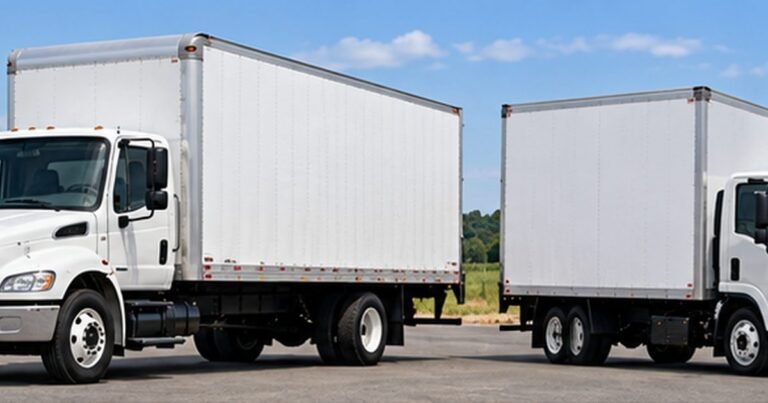
A box truck’s length does not determine whether you need a CDL. A 26-foot truck can be built below the federal Class B threshold, while a shorter heavy-duty truck can exceed it. The number that matters first is the manufacturer’s gross vehicle weight rating, or GVWR, shown on the certification label.
For federal CDL classification, a single vehicle with a GVWR of 26,001 pounds or more falls into Group B. That is the category normally associated with a Class B CDL when the vehicle is used in a way covered by the CDL rules. If the truck is below that threshold, a CDL may still be required for certain passenger or placarded hazardous-material operations.
Where to Find the GVWR on a Box Truck
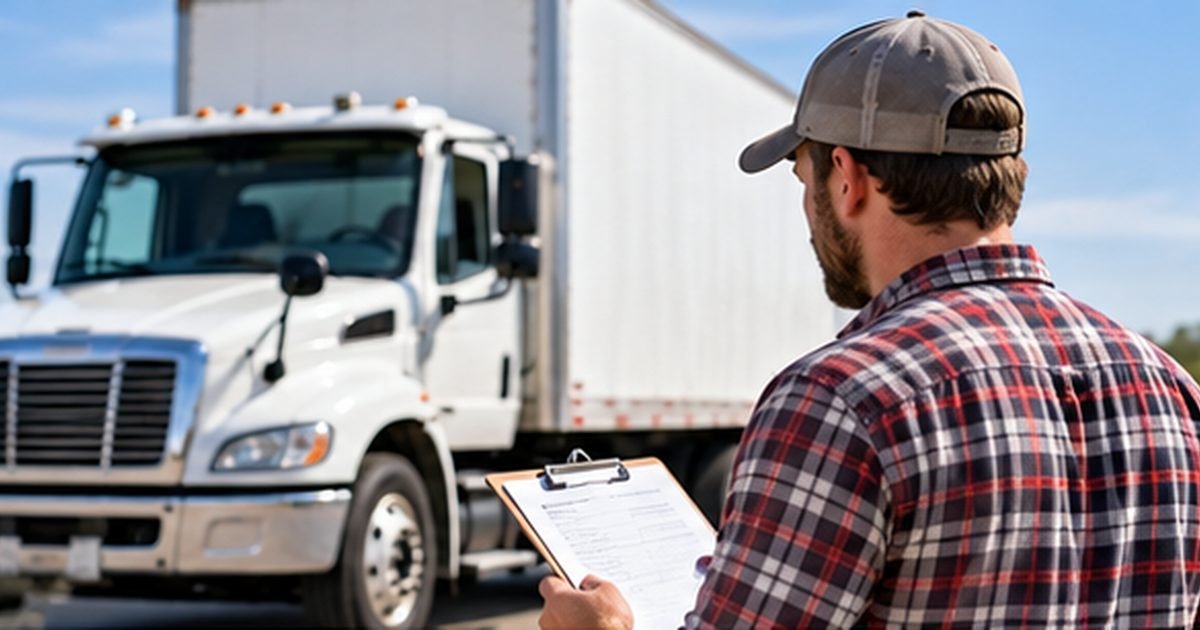
Look for the manufacturer certification label, usually on the driver-side door jamb, door edge, or cab area. Do not use the empty scale weight or a payload number from an advertisement as a substitute for GVWR.
The certification label is especially important on rental and used trucks because two visually similar 26-foot box trucks can have different ratings. If you are operating for a business, also keep the vehicle registration and any fleet specification sheet available so the rating can be checked before assigning a driver.
What Changes When You Tow a Trailer
Towing can change the CDL class. Under the federal Group A definition, a combination generally falls into Class A territory when the gross combination weight rating is 26,001 pounds or more and the towed unit is rated over 10,000 pounds.
A heavy straight truck that is 26,001 pounds or more and tows a trailer rated at 10,000 pounds or less remains in the Group B category. This is why a driver should check both the truck rating and the trailer rating before assuming a Class B license is enough.
Commercial Use Can Trigger Rules Even Below the CDL Threshold
Not needing a CDL does not mean a business-operated box truck is free from all commercial-vehicle rules. FMCSA uses a lower 10,001-pound threshold for some interstate commercial motor vehicle requirements. Depending on the operation, that can affect matters such as driver qualification, hours of service, vehicle inspection, and company compliance.
State rules can also add requirements for intrastate operations. If you cross state lines or haul for a business, check both federal and state rules instead of relying only on the familiar 26,001-pound CDL number.
Rental Box Trucks and Moving Trucks
Rental companies often offer trucks specifically configured so ordinary consumers can drive them with a regular license, but you should still check the individual truck’s certification label and rental agreement. Brand name, advertised box length, or the fact that the truck is available to the public does not replace the weight rating.
If you rent a box truck for commercial work, the use of the vehicle can also matter. A truck that is legal to drive without a CDL can still be subject to business, insurance, registration, or motor-carrier requirements.
Simple CDL Check Before You Drive
- Find the truck’s GVWR on the manufacturer label.
- Check the trailer GVWR if you will tow anything.
- Confirm whether the load involves placarded hazardous materials or passenger transportation.
- Determine whether the trip is interstate or intrastate commercial use.
- Check your state licensing rules if the operation is not clearly covered by the federal examples.
For a typical box truck used to haul ordinary property, the clearest dividing line is still 26,001 pounds GVWR for a heavy single vehicle. The safest approach is to verify the actual truck rather than judge by appearance.
FAQs: Do You Need a CDL to Drive a Box Truck?
Q. Can I drive a 26-foot box truck without a CDL?
A. Length alone does not decide CDL status. Check the truck’s GVWR and use. Some 26-foot rental trucks are below 26,001 pounds GVWR, while heavier commercial models may require a Class B CDL.
Q. Does an empty 26,001-pound-GVWR truck still require a CDL?
A. Generally yes when the federal Class B definition applies. CDL classification considers the rating or actual weight, not only the current cargo load.
Q. Can a Class B driver tow a trailer?
A. A Class B driver can operate the qualifying heavy single vehicle and tow a vehicle that does not exceed the applicable 10,000-pound threshold. Heavier trailers can trigger Class A requirements.
Conclusion
If you are wondering do you need a CDL to drive a box truck, check the GVWR first. A single truck at 26,001 pounds or more usually points to Class B requirements, while lighter trucks may be driven without a CDL unless another federal or state rule applies.
Disclaimer: This article provides general educational information. CDL and commercial vehicle rules can vary by state and operation. Confirm current requirements with FMCSA and your state licensing agency.