Straight Truck vs Box Truck: What’s the Difference?

Straight truck vs box truck is not always an either-or comparison. A box truck is usually a type of straight truck. “Straight truck” describes the chassis layout, while “box truck” describes the enclosed cargo body mounted on that chassis.
Understanding that distinction helps when shopping, renting, licensing, or comparing commercial vehicles.
Straight Truck vs Box Truck: The Basic Difference
A straight truck has its cab, engine, and cargo body or work body attached to one chassis. Unlike a tractor-trailer, the cargo section is not a separate semitrailer.
A box truck is a straight truck with an enclosed rectangular cargo box. Common names include cube truck, moving truck, or box van, although terminology varies by size and region.
| Feature | Straight Truck | Box Truck |
|---|---|---|
| Meaning | Chassis layout | Enclosed cargo-body type |
| Cargo body | Can be box, dump, flatbed, refuse, utility, or other | Enclosed rectangular box |
| Typical use | Delivery, construction, municipal, service | Moving, furniture, parcel, retail delivery |
| Trailer separate? | No | No |
| CDL | Depends on weight/use | Depends on weight/use |
What Counts as a Straight Truck?
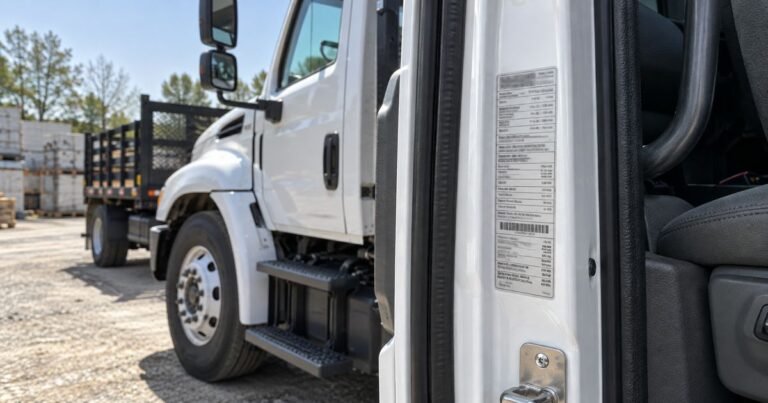
Examples include box trucks, dump trucks, garbage trucks, some fire apparatus, delivery trucks, flatbed straight trucks, and utility service trucks. The defining feature is that the cab and main body share one chassis.
That layout makes straight trucks easier to maneuver than many tractor-trailer combinations, especially in urban areas.
What Counts as a Box Truck?
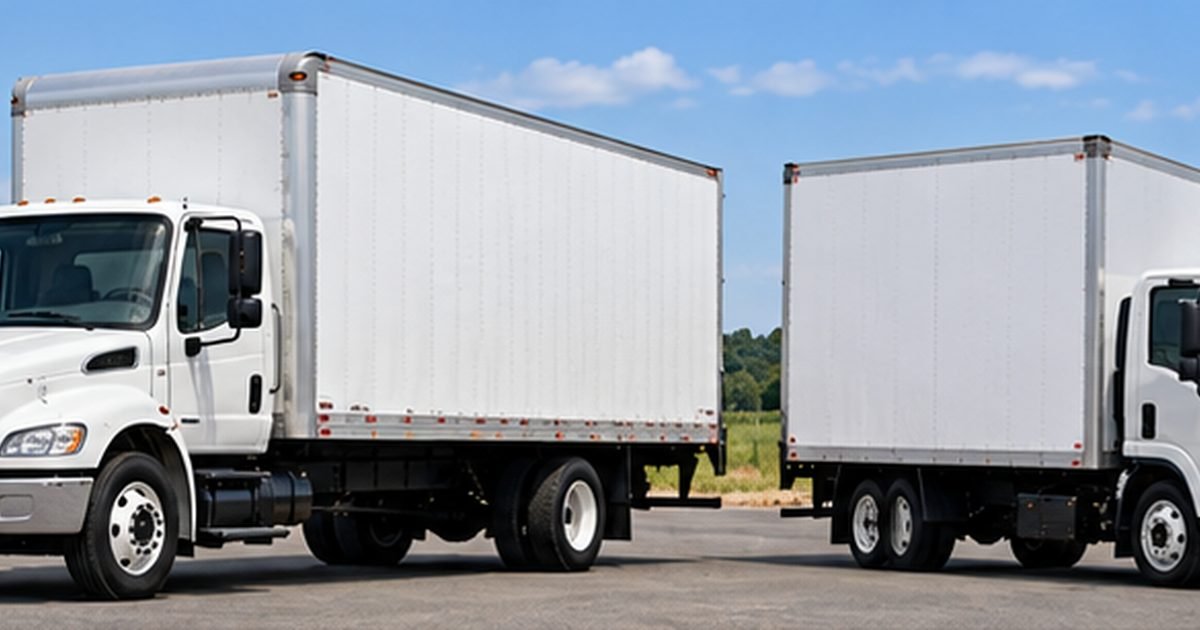
A box truck has an enclosed cargo body with vertical walls and a roof. The rear normally uses a roll-up or swing door. Some trucks also have side doors, ramps, or hydraulic liftgates.
The enclosed body protects freight from weather and keeps cargo out of public view. That makes box trucks popular for household moving, furniture delivery, appliance delivery, parcel work, event services, and local distribution.
Which Is Easier to Drive?
Most straight trucks are easier for beginners to understand than tractor-trailers because there is no articulation point between a tractor and semitrailer. However, a long straight truck still requires careful mirror use, wide turns, height awareness, and extra stopping distance.
Box trucks can have large blind spots, high roofs, and significant rear overhang. Drivers should know the vehicle’s height and watch for low bridges, tree branches, awnings, and parking structures.
Cargo and Loading Differences
A box truck is optimized for dry, enclosed cargo. A flatbed straight truck is better for oversized material loaded by forklift or crane, while a dump truck is designed for loose material.
That means the best choice depends on what you carry rather than the chassis alone.
- Furniture and appliances: box truck.
- Gravel and soil: dump straight truck.
- Lumber and long material: flatbed straight truck.
- Parcels and retail deliveries: box truck.
- Service equipment: utility-body straight truck.
CDL Requirements
The body style does not determine whether a CDL is needed. FMCSA CDL classifications use vehicle weight, combination weight, passenger capacity, and hazardous-material rules.
A single vehicle with a GVWR or actual weight of 26,001 pounds or more generally falls under Class B. Lighter trucks may not require a CDL, although other commercial rules can still apply.
See our box truck CDL guide for the licensing thresholds.
Box Truck vs Tractor-Trailer
A tractor-trailer uses a separate power unit and semitrailer. That gives fleets more flexibility to swap trailers and generally provides more freight capacity, but it also makes driving and backing more complex.
A box truck keeps the cargo body permanently attached. That is convenient for local routes where the truck returns with the same body every day.
Which Is Better for a Small Business?
If your business carries dry goods, tools, furniture, or equipment that must stay protected, a box truck is often a practical choice. If you need a specialized body, the broader straight-truck category gives more options.
Compare payload, GVWR, interior dimensions, liftgate capacity, fuel use, insurance, maintenance, parking, and licensing before buying.
For basic definitions, see our guides to box trucks and straight trucks.
Why the Terms Get Confused
“Straight truck” describes the vehicle configuration, while “box truck” usually describes the cargo body mounted on that configuration. A straight truck has the cab, engine, chassis, and cargo-carrying body on one non-articulated vehicle. A box truck is normally a straight truck with an enclosed rectangular cargo box.
That means the terms overlap, but they are not perfect synonyms. A dump truck, refuse truck, beverage truck, utility truck, and many fire trucks can all be straight trucks without having an enclosed box body.
How the Body Style Changes the Job
Box trucks are built to protect cargo from weather and theft. They work well for furniture, packaged goods, appliances, retail deliveries, moving, and other loads that benefit from an enclosed body. Their flat interior walls also make it easier to stack cartons or secure household goods.
Other straight trucks use specialized bodies. A dump body is designed to unload loose material. A flatbed accepts oversized or irregular cargo. A refrigerated body adds temperature control. When choosing a truck, the body often matters as much as the chassis because it determines how efficiently the vehicle can perform the job.
GVWR Matters More Than the Name
Neither “straight truck” nor “box truck” tells you the license class by itself. Federal CDL rules are based largely on weight ratings and vehicle use. A heavy straight vehicle with a GVWR of 26,001 pounds or more falls into the Group B category, while lighter models may not require a Class B CDL unless another rule applies.
This is why two box trucks of the same body length can create different licensing requirements. Always check the manufacturer certification label rather than assuming that a 16-foot, 20-foot, or 26-foot box automatically fits one license category.
Loading and Unloading Differences
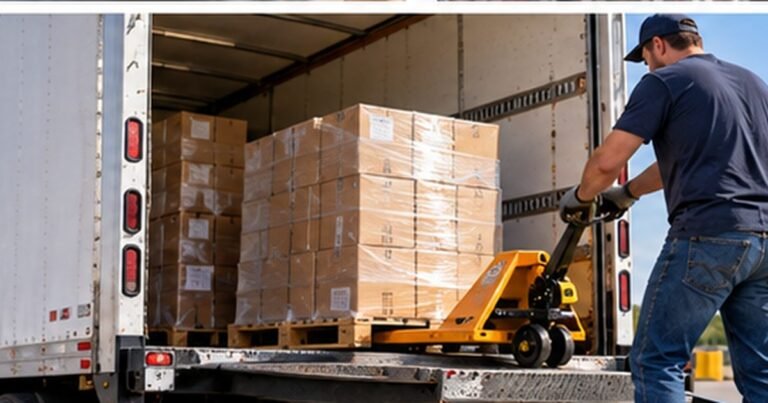
Most box trucks use a rear roll-up or swing door. Some have a liftgate, which can be valuable for pallets, appliances, and heavy furniture when a loading dock is not available. Others rely on a ramp for hand trucks and rolling equipment.
Specialized straight trucks use different loading systems. Dump trucks raise the body hydraulically, flatbeds can be loaded from the side with forklifts, and beverage bodies use multiple side compartments. Think about your loading environment before choosing a body style.
Which Is Better for Local Delivery?
For parcel, furniture, appliance, or retail work, an enclosed box truck is usually the more practical straight-truck body. It keeps cargo organized and protected and can work at homes, storefronts, warehouses, and small loading areas.
If your business hauls gravel, machinery, landscape material, or unusually shaped freight, another straight-truck body may be more efficient. The best choice comes from the cargo and route, not from the broad vehicle label.
Questions to Ask Before Buying or Renting
- What is the truck’s GVWR and actual empty weight?
- How much payload is available after the body, liftgate, fuel, driver, and equipment are included?
- Do you need a dock-height body, ramp, or liftgate?
- Will the truck fit the streets, parking areas, and loading zones on your route?
- Does your operation require refrigeration, shelving, tie-downs, or another specialized body?
Thinking through these details prevents a common mistake: choosing a truck by body length alone and discovering later that its weight rating, payload, or loading setup does not match the work.
FAQs: Straight Truck vs Box Truck
Q. Is every box truck a straight truck?
A. In common US usage, yes. A box truck normally uses a straight-truck chassis with an enclosed box body.
Q. Is every straight truck a box truck?
A. No. Straight trucks can use dump, flatbed, refuse, utility, tanker, and other body types.
Q. Which is better for local delivery?
A. A box truck is often ideal when cargo needs weather protection. Other straight-truck bodies may be better for construction or specialized work.
Conclusion
In a straight truck vs box truck comparison, remember that straight truck describes the vehicle layout and box truck describes one common cargo body. Choose based on cargo, payload, loading method, size, and licensing needs.
Disclaimer: This article provides general educational information. Commercial vehicle definitions and licensing rules can vary by jurisdiction and operation.