Best Tractors for 5 Acres: Size, HP & Buying Guide

The best tractor for 5 acres is usually a subcompact or small compact tractor, but the correct size depends on what you need to mow, lift, grade, clear, or tow.
Five acres can mean a flat lawn, wooded property, horse pasture, steep ground, or a mixed-use homestead. The work matters more than the acreage number alone.
Best Tractors for 5 Acres: Start With Your Workload
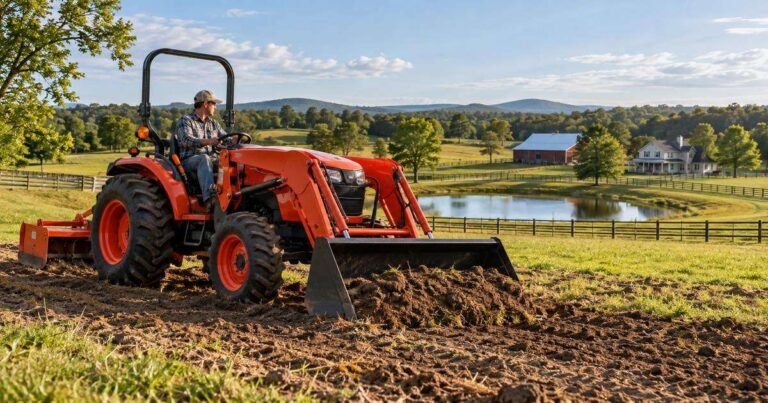
For light mowing and garden chores, a subcompact may be enough. If you need regular loader work, driveway grading, brush cutting, snow removal, or pallet handling, a heavier compact tractor usually gives you more stability and attachment capacity.
How Much Horsepower Do You Need?
For many five-acre properties, shoppers often compare machines in the roughly 20-to-35 horsepower class. That range is not a rule. PTO requirements, terrain, loader work, and implement size can push you higher or lower.
A rotary cutter, tiller, snow blower, or other PTO attachment should be matched to published PTO horsepower, not only engine horsepower. Always check the implement specification before buying.
Subcompact or Compact Tractor?
Subcompact tractors are easy to maneuver, store, and mow with. They work well around homes, barns, gardens, and smaller gates.
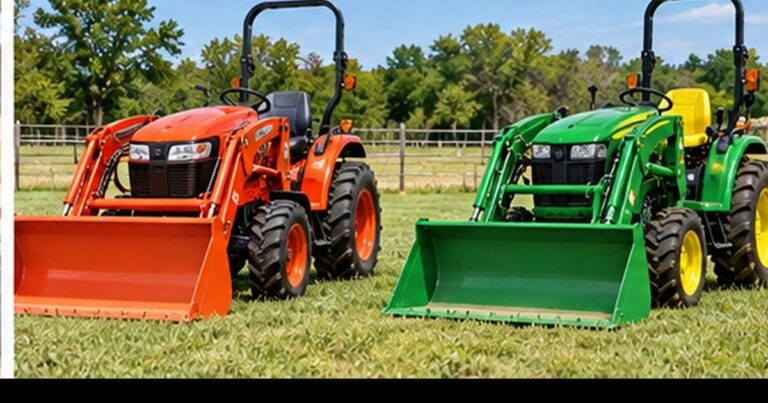
Compact tractors are usually heavier and offer more ground clearance, loader capability, and room for larger attachments. That extra weight can be valuable for gravel, logs, brush, and material handling.
Loader Capacity Matters
Many buyers focus on engine horsepower and overlook loader specifications. If your five acres involves mulch, gravel, manure, firewood, or pallet forks, loader lift capacity may affect your satisfaction more than a few extra horsepower.
Compare lift capacity at the same measurement point and include the weight of buckets, forks, grapples, and carried material.
Think About Terrain
Four-wheel drive is especially useful on slopes, mud, loose gravel, snow, and during loader work. Tire choice also changes traction and lawn damage.
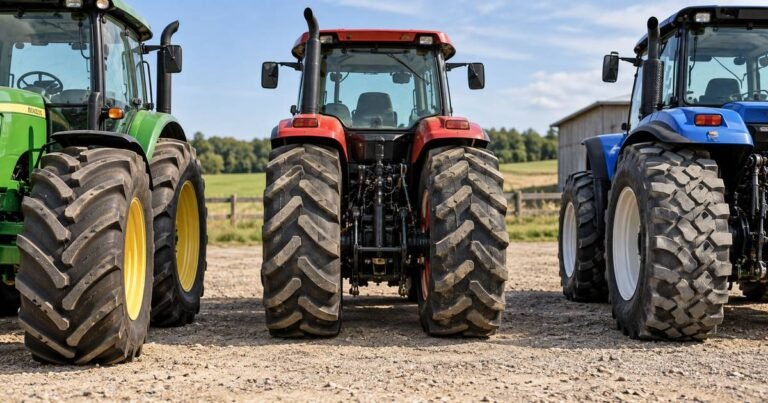
R4 industrial tires are common on all-purpose property tractors, while turf tires protect lawns better and R1 agricultural tires provide more aggressive traction.
Attachments to Plan For
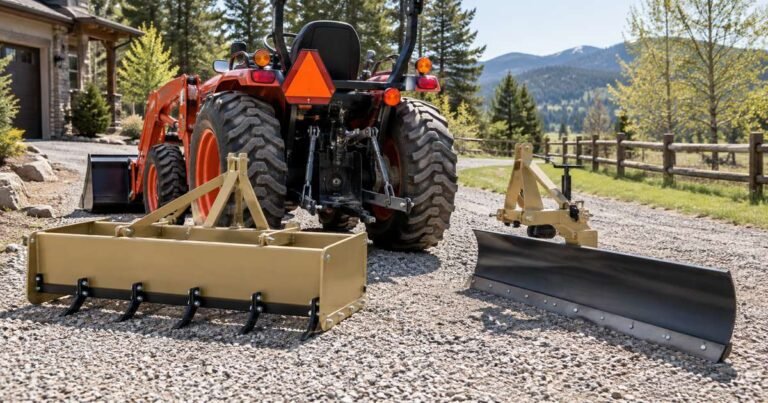
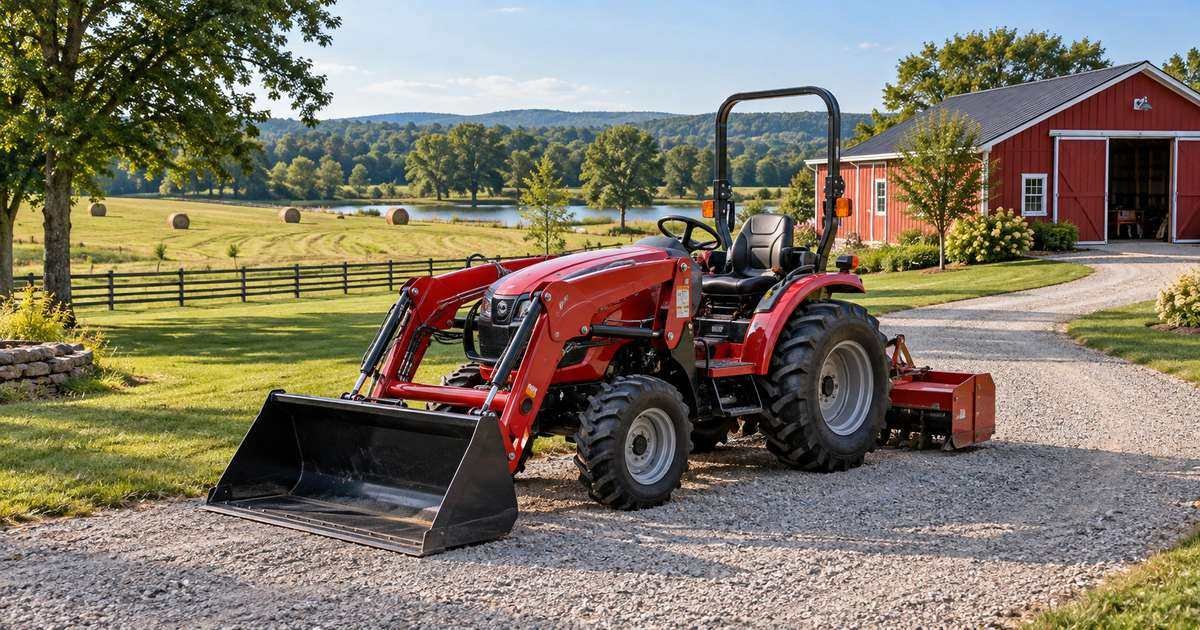
Common five-acre attachments include a loader, pallet forks, rotary cutter or finish mower, box blade, rear blade, tiller, grapple, and post-hole digger.
Do not buy every attachment immediately. Choose the two or three that solve your most frequent jobs first.
Storage and Transport
Measure garage doors, gates, trails, and trailer capacity before selecting a tractor. A cab, loader, or rear implement can make the overall machine much longer or taller than expected.
If you plan to trailer the tractor, count the full transported weight including loader, implement, ballast, fuel, and tie-down equipment.
Practical Buying or Ownership Checklist
- List your five most common jobs.
- Identify the heaviest regular loader or PTO task.
- Compare subcompact and small compact models.
- Check PTO horsepower and loader specifications.
- Measure gates, storage space, and trailer capacity.
- Test-drive at least two tractor sizes.
For a broader sizing method, read our tractor size guide and compact tractor attachments guide.
How Loader Work Changes the Tractor You Need
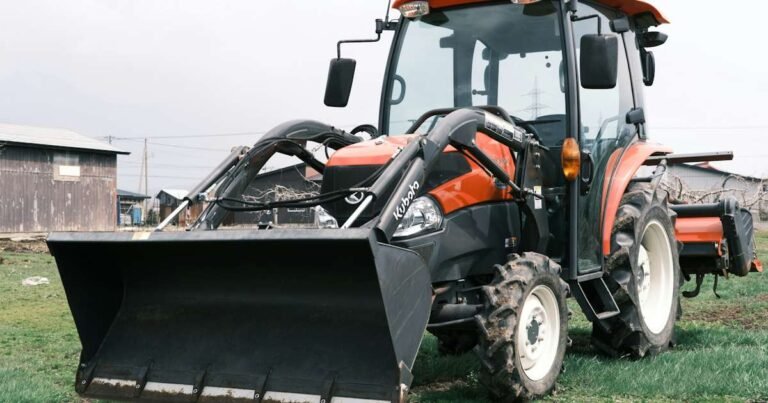
Loader work often pushes buyers toward a heavier tractor faster than mowing does. Moving gravel, soil, mulch, logs, manure, or firewood places real demand on the front axle, hydraulics, tires, and ballast. A tractor that feels strong with an empty bucket can feel very different with a dense load.
Compare loader lift capacity at the same measurement point. One manufacturer may quote capacity at the pivot pins while another lists capacity farther forward. Also include the weight of the bucket, grapple, or pallet forks because attachment weight reduces the remaining capacity available for the load.
Finish Mower vs Rotary Cutter on 5 Acres
A finish mower is designed for lawn-like grass and a clean cut. A rotary cutter is better for taller grass, weeds, and light brush. If your property includes both lawn and rough field areas, you may eventually need both, or you may choose one based on the area you maintain most often.
Mower width affects both tractor size and job time. A wider implement can reduce mowing time, but it also requires more PTO power, more room to turn, and more care around trees, gates, and ditches. Match the implement first, then confirm the tractor can power and safely carry it.
Hydraulics and Third-Function Needs
Basic loader work usually needs the tractor’s standard loader hydraulic circuit. A grapple often needs an additional third-function valve so the operator can open and close the grapple while still raising or curling the loader.
If a grapple, hydraulic snow blade, or other hydraulic attachment is part of your plan, price that equipment before buying the tractor. Adding hydraulic capability later can be possible, but it may cost more and require dealer installation.
How Much Tractor Weight Is Enough?
Tractor weight improves traction and stability, but more is not always better. A heavier tractor can pull a box blade more effectively and feel more planted with a loader, yet it can rut soft ground and damage lawns more easily.
For mixed-use properties, think about where the tractor spends most of its time. If half the work is on finished lawn, a lighter machine with suitable tires may be easier to live with. If most work involves gravel, woods, logs, or rough ground, extra weight can be a major advantage.
New vs Used for a Small Property
New tractors offer warranty coverage, dealer support, and known history. Used tractors can reduce purchase cost, especially when you find a well-maintained machine with a loader and useful attachments already included.
On a five-acre property, the tractor may accumulate relatively few hours each year. That can make a good used tractor attractive because you are less likely to wear it out quickly. Condition, parts support, and maintenance history still matter more than a low hour number alone.
Budget for the Complete Tractor Package
The tractor itself may be only part of the real purchase. Loader, mower, pallet forks, box blade, ballast, third-function hydraulics, delivery, taxes, and a suitable trailer can all add to the total.
Build a list of the jobs you need to complete during the first year and price only the attachments that support those jobs. You can add less-used implements later after you understand what the property actually needs.
A Practical Five-Acre Example
Consider a five-acre property with two acres of lawn, two acres of rough pasture, a 500-foot gravel driveway, and occasional firewood work. A subcompact can mow and handle light loader chores, but a small compact tractor may be more comfortable for grading, rotary cutting, and moving logs because of its additional weight and ground clearance.
If the same five acres are mostly finished lawn with narrow gates and landscaping, the smaller subcompact can become the better choice. The acreage did not change, but the work did. This is why property layout and recurring tasks should drive the purchase.
Dealer Support and Parts Availability
Dealer quality matters more than many first-time buyers expect. A nearby dealer with parts, mobile service, and technicians familiar with your tractor can save time when a hydraulic hose, sensor, seal, or warranty issue appears.
Before buying, ask about normal service turnaround, pickup and delivery charges, common parts stock, and whether attachments can be installed later. A slightly more expensive tractor with strong local support can be easier to own over ten or fifteen years.
FAQs: Best Tractors for 5 Acres
Q. Is 25 horsepower enough for 5 acres?
A. It can be for many properties, especially mowing and light loader work. Heavy brush cutting, steep terrain, larger attachments, or frequent lifting may justify more capacity.
Q. Do I need a compact tractor for 5 acres?
A. Not always. A subcompact can work well for lighter tasks, while a compact is better when weight, ground clearance, and attachment capability matter.
Q. Is four-wheel drive worth it?
A. For most compact-tractor property work, especially loader use, snow, hills, or soft ground, four-wheel drive is very useful.
Conclusion
The best tractor for 5 acres is the smallest machine that can safely handle your hardest regular work. Match weight, PTO power, hydraulics, loader capacity, tires, and attachments to the property instead of choosing by acreage alone.
Disclaimer: This article provides general educational information. Tractor capacity, stability, and attachment compatibility vary by model. Follow manufacturer specifications and operator manuals.