Box Blade vs Rear Blade: Which Tractor Attachment Is Better?

Box blade vs rear blade depends on the job. A box blade is better for moving, carrying, filling, and leveling material, while a rear blade is excellent for angling, crowning, ditch shaping, light grading, and snow.
Many property owners eventually use both because their strengths overlap but are not identical.
Box Blade vs Rear Blade: Main Differences
Box Blade Strengths
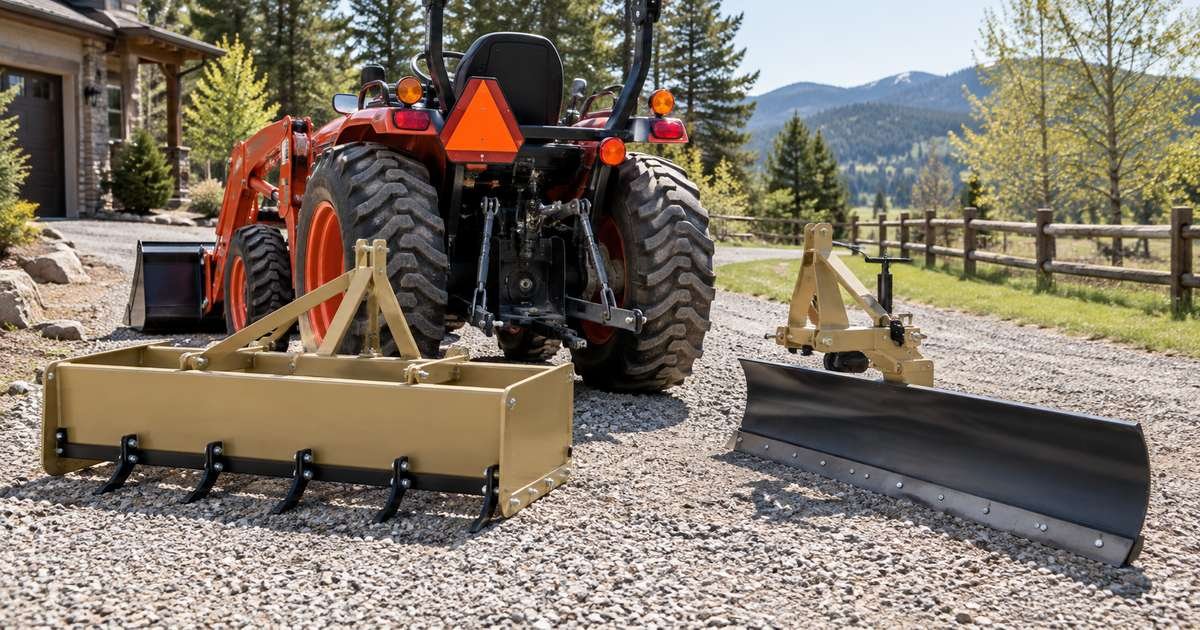
A box blade has side plates and front and rear cutting edges that trap material temporarily. This lets it carry soil or gravel from high spots into low areas.
Many box blades also include scarifier teeth that loosen packed gravel or hard soil before the cutting edges reshape it.
Rear Blade Strengths
A rear blade is an open blade that can usually be angled left or right. That makes it useful for crowning roads, pulling material toward a centerline, shaping drainage, and windrowing snow.
Some rear blades can also tilt or offset for more specialized grading.
Which Is Better for Gravel Driveways?
A box blade is excellent for repairing potholes, redistributing loose material, and reshaping neglected gravel. A rear blade is useful for creating a crown and moving gravel sideways.
A grading scraper is another useful tool for routine maintenance once the driveway is reasonably shaped.
Learning Curve
Box blades take practice because top-link length and scarifier depth change how aggressively the implement cuts or spreads.
Rear blades also require technique, especially when trying to maintain consistent crown or ditch shape.
Tractor Size and Weight
Both implements need enough tractor weight and traction to cut effectively. An attachment that is too wide or heavy can stop or push a light tractor.
Match width and weight to tractor horsepower, tire track, three-point capacity, and manufacturer recommendations.
Snow Removal
Rear blades are commonly used for snow because they can be angled to move snow to one side. Box blades can move snow but are less convenient for long directional passes.
Be careful when reversing with rear implements and avoid striking hidden obstacles.
Buying Checklist
- Decide whether you need material carrying or side-casting.
- Measure tractor width.
- Check implement weight.
- Confirm hitch category.
- Consider scarifier needs.
- Evaluate snow and drainage work.
For more implement options, see our best compact tractor attachments.
Scarifiers Make a Box Blade More Aggressive
Scarifier teeth can be lowered to break compacted gravel, hard soil, or shallow roots before the cutting edges move material. They are especially useful when a driveway surface has become hard and potholes cannot be repaired by simply dragging loose gravel.
Use shallow passes first. Deep scarifier settings can stop a light tractor or pull up large rocks. After loosening the surface, raise the scarifiers and use the box blade to redistribute material.
Rear Blade Angle, Tilt, and Offset
A rear blade can often rotate to cast material left or right. Better models may also tilt for crown or ditch work and offset so the blade works beyond the tractor’s tire track.
These adjustments make a rear blade versatile, but they also require practice. Changing one angle can affect how deeply the blade bites and how the tractor tracks.
Top-Link Adjustment Matters
Shortening the top link can make a box blade’s front cutting edge more aggressive, while lengthening it can favor the rear edge and smoothing action. Small changes can transform how the blade behaves.
Hydraulic top links make adjustment faster from the seat, which is useful for owners who grade frequently. A manual top link works well but requires stopping to make changes.
Working With Gravel Without Losing Material
When repairing a driveway, avoid pushing gravel into ditches or grass where it is difficult to recover. Work material toward the road center and maintain drainage so water leaves the surface instead of cutting channels.
Frequent light maintenance is easier than rebuilding a severely rutted driveway. A few passes after heavy rain or traffic can prevent larger repairs later.
Weight per Foot Matters
Two six-foot box blades can behave very differently if one is much heavier. Extra weight helps the cutting edges and scarifiers penetrate compacted material, while a very light blade may ride over hard spots.
The tractor still needs enough three-point capacity and front-end weight to carry the implement safely. Heavier is useful only when the tractor can control it.
Matching Width to Tractor
For general grading, many owners choose an implement wide enough to cover the tractor’s rear tire tracks. That helps prevent the tires from leaving unworked strips.
Going much wider increases draft load and can make the implement harder to control on uneven ground. Match width to tractor weight, horsepower, and the material you expect to move.
Snow Removal With a Rear Blade
Rear blades are useful for pushing or pulling snow on long driveways. Many operators reverse the blade or angle it to reduce the chance of catching gravel before the ground freezes.
Be aware of obstacles hidden under snow. Curbs, rocks, drainage structures, and uneven pavement can stop a rigid blade abruptly.
Box Blade for Driveway Rehabilitation
A box blade is especially useful when potholes need to be opened up rather than simply filled. Scarifiers loosen the compacted surface, allowing fresh and existing material to blend.
After loosening, repeated shallow passes can redistribute gravel and restore crown. Trying to repair deep potholes by dragging loose stone over the top often produces only a temporary fix.
Owning Both Implements
For a long gravel driveway, the two tools complement each other. A box blade handles renovation and material redistribution, while a rear blade handles crowning, ditches, light grading, and snow.
If budget allows only one at first, choose according to the job you perform most often and add the second after you understand where the first tool falls short.
Hydraulic Adjustments Can Save Time
A hydraulic top link lets the operator change box-blade pitch from the seat. A hydraulic side link can change tilt for crowns and ditches. Rear blades may also offer hydraulic angle or offset on larger models.
These features add cost and require hydraulic remotes, but they can be worthwhile for owners who grade long driveways frequently.
Use Multiple Light Passes
Trying to move too much material in one pass can stop a compact tractor, create wheel spin, and leave uneven results. Multiple shallow passes are easier to control.
Work slowly enough to watch how material flows. Small adjustments to top link, blade angle, and travel direction can produce a better surface than simply adding speed.
Final Choice
Choose a box blade when rebuilding gravel, filling low spots, and loosening compacted surfaces are the priority. Choose a rear blade when crowning, ditching, light grading, and snow removal happen more often.
For properties with long gravel drives, owning both eventually provides the most flexibility because each tool handles a different part of maintenance well.
Practice on a Small Area First
Before reshaping an entire driveway, practice on a short section where mistakes are easy to correct. Learn how the tractor reacts when the blade fills, how top-link changes alter the cut, and how much material moves with each pass.
FAQs: Box Blade vs Rear Blade
Q. Which is better for gravel driveways?
A. A box blade is excellent for repairing and redistributing gravel, while a rear blade is excellent for crowning and moving material sideways.
Q. Which is easier for snow?
A. A rear blade is usually more convenient because it can be angled to windrow snow.
Q. Should the blade be wider than the tractor?
A. It is often sized to cover the tire tracks when angled, but follow tractor and implement recommendations.
Conclusion
Choose a box blade for carrying, filling, and leveling material. Choose a rear blade for angling, crowning, ditch shaping, and snow. Owners with frequent driveway work often find both useful.
Disclaimer: Implement sizing and safe operation depend on tractor weight, hitch, terrain, and manufacturer limits.