Box Truck Liftgate Guide: Types, Capacity & Buying Tips

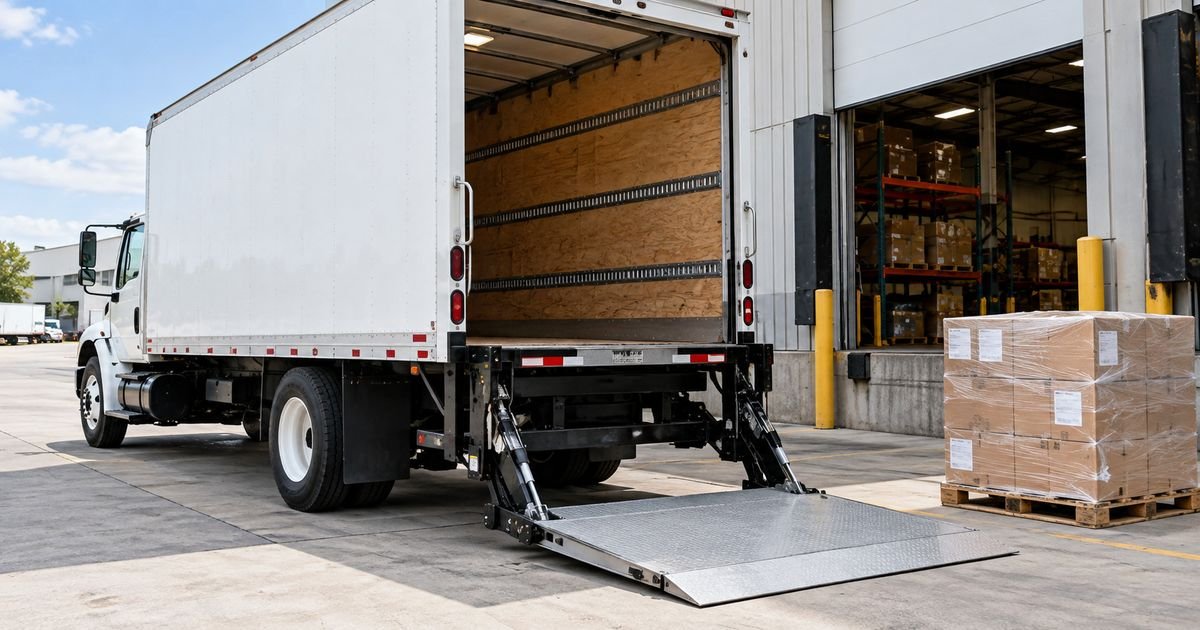
A box truck liftgate is a powered platform mounted at the rear or side of a truck to raise and lower cargo between ground level and the cargo floor. It can make furniture, appliances, pallets, vending equipment, and other heavy items much easier to handle.
Liftgates vary in capacity, platform size, folding design, hydraulic layout, and installation weight, so the correct gate depends on your cargo and truck.
Box Truck Liftgate Guide
Common Liftgate Types
Tuck-under gates fold beneath the truck when stored. Rail-style gates travel vertically at the rear. Cantilever and specialty gates offer different platform movement and loading characteristics.
The best design depends on dock use, ground loading, route frequency, and cargo shape.
Capacity Ratings
Liftgate capacity should exceed the actual weight of the cargo, pallet, pallet jack, and any other load placed on the platform.
Load position also matters because placing weight far from the truck can increase leverage on the gate.
Platform Size
A platform that is too small can make appliances, pallets, or carts difficult to stabilize. Measure typical cargo before choosing the gate.
Consider whether a pallet jack and operator need to fit on the platform at the same time.
Liftgate Weight Reduces Payload
A liftgate can add substantial weight to the truck. That reduces the payload remaining under GVWR and adds weight near the rear axle.
Reweigh the truck after major body equipment is installed if payload is important to your operation.
Electrical and Hydraulic Maintenance
Liftgates commonly use electric-hydraulic systems. Battery condition, cables, hydraulic fluid, hoses, pins, switches, and platform mechanisms need routine inspection.
A weak truck battery or poor cable connection can cause slow or unreliable liftgate operation.
Used Liftgate Inspection
- Check rated capacity label.
- Inspect platform for cracks or bending.
- Look for hydraulic leaks.
- Operate through full travel.
- Check switches and wiring.
- Inspect mounting points and welds.
- Confirm platform closes and latches securely.
For payload planning, see our truck payload guide.
Tuckaway vs Rail Liftgates
Tuckaway liftgates fold under the rear of the truck when not in use. They keep the rear opening relatively clear for dock loading and are common on delivery trucks.
Rail-style liftgates travel vertically at the rear. They can provide large platforms and stable loading, but the gate structure remains at the back of the body and can affect dock access.
Platform Size Can Be as Important as Capacity
A 3,000-pound gate may still be a poor choice if the platform is too short for the appliance, pallet jack, or rolling cart you use. Measure the full load footprint, not only its weight.
Consider how the operator steps on and off the platform, where controls are located, and whether the gate provides enough surface for safe maneuvering.
Battery and Charging-System Demand
Electric-hydraulic liftgates can draw significant current. Frequent deliveries may require healthy batteries, strong cable connections, and a charging system sized for the duty cycle.
Repeated slow operation can be a sign of a weak battery, poor ground, worn pump, hydraulic problem, or excessive load. Diagnose the cause rather than continuing to operate a struggling gate.
Liftgate Safety Around Traffic and Slopes
Use liftgates on stable ground whenever possible. A truck parked on a slope can change platform angle and make carts or pallets more difficult to control.
Use cones or other traffic-control measures when unloading near moving vehicles, and keep bystanders clear of pinch points and the area beneath the platform.
Maintenance Items to Track
Inspect pivot pins, rollers, hinges, hydraulic hoses, cylinders, wiring, switches, platform stops, and mounting points on a schedule. Lubricate only where the manufacturer specifies.
Rust and cracked welds deserve attention because liftgates repeatedly carry concentrated loads. Repairs should preserve the manufacturer’s structural design and rated capacity.
Cantilever and Column-Lift Designs
Some liftgates use cantilever or column-style designs that keep the platform level through a wide range of motion. These can work well for carts, pallets, and repeated delivery cycles.
Design choice affects platform size, dock compatibility, ground clearance, maintenance access, and how the gate stores when not in use. Compare the actual route and cargo before selecting a style.
Capacity Labels and Load Position
Liftgate capacity assumes the load is positioned within the manufacturer’s allowed area. Placing a heavy item too far toward the platform edge increases leverage and can overload the structure even when the item weighs less than the headline rating.
Drivers should know where the rated load center is and how to position pallets, carts, and appliances before operating the gate.
Cold Weather Operation
Low temperatures can affect batteries, hydraulic fluid, switches, and moving parts. A gate that operates normally in summer may become slower in winter if the electrical or hydraulic system is marginal.
Follow the manufacturer maintenance schedule and use specified fluids. Repeatedly forcing a slow or binding gate can turn a small service issue into a larger repair.
Daily Driver Inspection
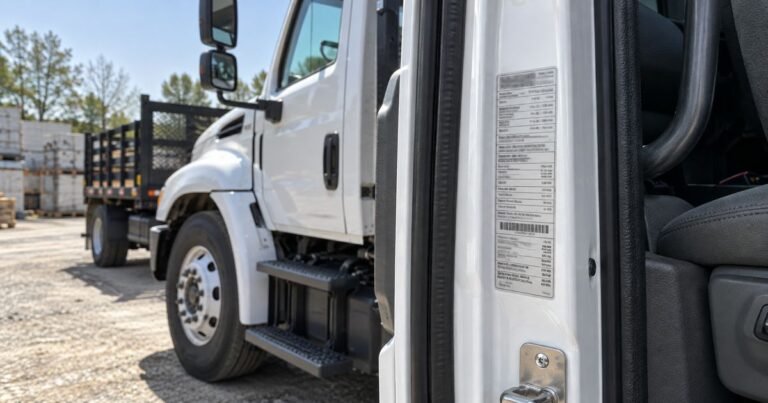
Before the first delivery, check the platform, hinges, controls, visible hydraulic lines, wiring, warning decals, and any retaining latches. Look for leaks, loose parts, bent components, and damaged non-slip surfaces.
A quick inspection is especially important after a gate has been struck, overloaded, or used on uneven ground.
Training Matters
New drivers should be shown safe load placement, control operation, pinch points, platform travel, and how to secure the gate for road travel. Do not assume the controls are self-explanatory.
Consistent training also helps prevent avoidable damage from dragging the platform, striking docks, or driving away before the gate is fully stored.
Used Liftgate Inspection
When buying a used box truck, cycle the liftgate several times and watch for jerky movement, unusual noise, leaks, bent platform sections, worn rollers, loose pins, or damaged wiring. A gate that works once during a sales demo may still have intermittent problems.
Check that the platform stores securely and does not sag during road travel. Ask for service records if the liftgate has had pump, cylinder, or structural repairs.
Weight Added by the Liftgate
A liftgate adds useful capability but also increases empty truck weight. That reduces the payload available for cargo under GVWR.
For businesses that rarely need a gate, a ramp may preserve more payload and reduce maintenance. For heavy frequent deliveries, the productivity benefit of a liftgate can outweigh the weight penalty.
Match the Gate to the Route
A delivery fleet making fifty stops a day places very different demands on a liftgate than a truck using the gate twice a week. High-cycle routes may justify heavier-duty components, larger batteries, and stricter preventive maintenance.
Before buying, estimate how many lift cycles the gate will make each day, the heaviest regular load, and whether drivers will use pallet jacks, carts, or hand trucks. Those details are more useful than choosing by rated capacity alone.
Keep the liftgate manual, rated-capacity information, and service history with the vehicle records. Drivers should know who to contact when the gate shows unusual movement, noise, leaks, or electrical problems instead of continuing to use damaged equipment.
Train every driver on the exact gate.
FAQs: Box Truck Liftgates
Q. Does every box truck need a liftgate?
A. No. Dock-to-dock routes may not need one. Ground deliveries of heavy cargo often benefit from a liftgate.
Q. Can a liftgate carry a pallet jack and pallet?
A. Only if total weight and load position stay within the gate’s rated capacity and platform dimensions.
Q. Does a liftgate affect axle load?
A. Yes. Its weight is mounted near the rear and contributes to rear-axle loading.
Conclusion
Choose a box truck liftgate by cargo weight, platform size, loading environment, truck payload, rear axle capacity, and route needs. Inspect and maintain the gate as part of the truck, not as an optional accessory.
Disclaimer: Follow the liftgate manufacturer’s capacity, maintenance, and safety instructions. Never exceed rated platform limits.