3-Point Hitch Categories Explained: Cat 0, 1, 2 & 3

3-point hitch categories group tractor hitch dimensions and implement connection sizes so owners can match tractors with compatible equipment.
Category 1 is extremely common on compact tractors, while smaller and larger machines may use Category 0, 2, or 3. Hitch category is important, but it does not guarantee that an implement is suitable for a tractor.
3-Point Hitch Categories Explained
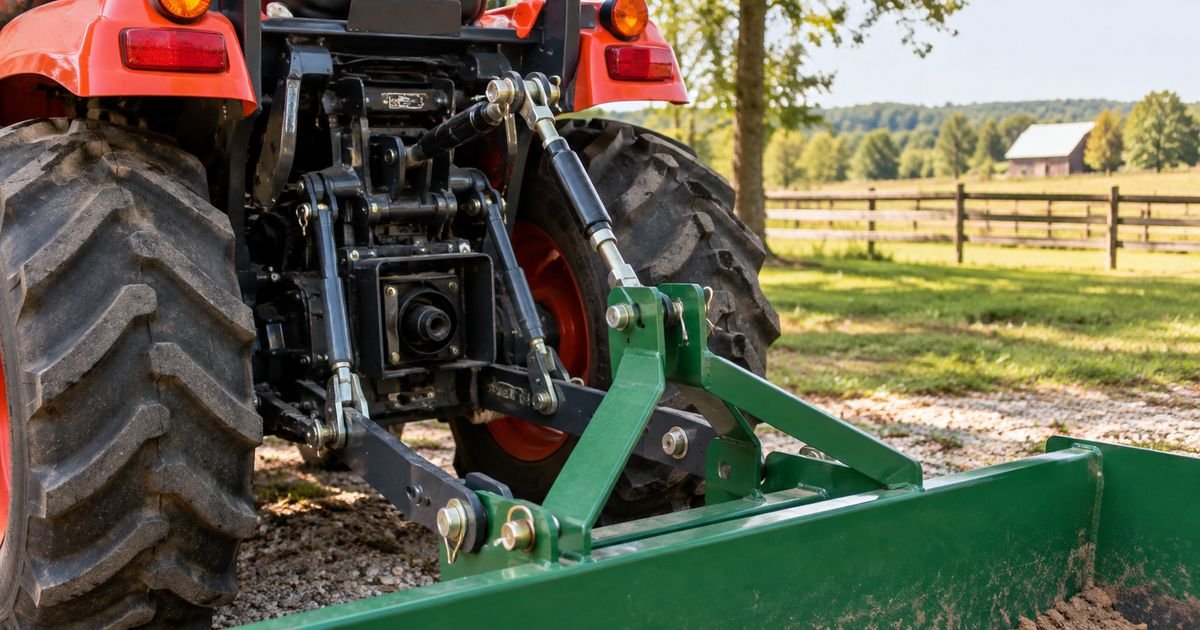
A three-point hitch connects an implement at two lower lift arms and one top link. The geometry lets the tractor lift, lower, and control many rear implements.
Category 0
Category 0 is associated with very small tractors and garden-type machines. Implements are lighter and smaller than standard compact-tractor equipment.
Availability can be more limited than Category 1 equipment, so check implement selection before buying an older or specialized small tractor.
Category 1
Category 1 is widely used on compact tractors. It supports box blades, rotary cutters, tillers, rear blades, spreaders, post-hole diggers, and many other attachments.
Within Category 1, implement weight and PTO requirements vary significantly. Physical connection does not mean the tractor can safely lift or power every Category 1 implement.
Category 2
Category 2 is used on larger tractors and heavier implements. Pins, spacing, and equipment weight are larger than Category 1.
Some tractors use convertible balls, bushings, or adjustable hitch systems to work with more than one category.
Category 3
Category 3 is generally found on larger agricultural tractors and heavy implements. It is outside the normal range for most compact-property owners.
These implements can require substantial tractor weight, lift capacity, and horsepower.
Quick Hitches
A quick hitch can simplify attachment changes, but not every implement follows identical top-hook geometry even within the same category.
Check whether the implement is quick-hitch compatible or needs bushings, adapters, or top-hook adjustments.
Compatibility Beyond Category
PTO horsepower, implement weight, driveline length, hydraulic requirements, tire clearance, and tractor stability all matter.
An implement can physically connect and still be too heavy, too wide, or too power-hungry for the tractor.
Matching Checklist
- Identify tractor hitch category.
- Check lower pin and top-link requirements.
- Confirm implement weight.
- Verify PTO horsepower and speed.
- Check hydraulic requirements.
- Confirm quick-hitch compatibility if used.
See our compact tractor attachment guide for practical implement choices.
Limited Category 1 on Subcompact Tractors
Some subcompact tractors use a three-point hitch often described as limited Category 1. The pin sizes may match Category 1, but the hitch may not lift as high or spread as wide as a full-size Category 1 system.
This can affect implements with tall hitch frames or driveline geometry. Before buying, confirm that the exact attachment has been used successfully on your tractor model or compare the hitch dimensions.
Lift Capacity Is Measured at Different Points
Three-point lift capacity may be listed at the lift-arm ends or at a point 24 inches behind them. Capacity farther behind the hitch is lower because the implement creates more leverage.
When comparing tractors, make sure the capacity figures use the same measurement point. Also consider the actual center of gravity of the implement, not just its total weight.
PTO Shaft Length and Safety
A PTO shaft must be long enough to stay engaged but short enough that it does not bottom out when the hitch moves. An incorrect shaft length can damage the tractor, implement, or driveline.
Keep guards and shields in place, shut the tractor down before approaching the PTO, and follow the implement instructions when measuring or shortening a driveline.
Top Link Adjustment Changes Implement Behavior
Shortening or lengthening the top link changes the implement angle. This can make a box blade cut more aggressively, change mower attitude, or affect how a rear blade contacts the ground.
Small adjustments can make a noticeable difference. Learn the setup for each implement rather than leaving the top link in one position for every job.
Stabilizers and Sway Control
Lower lift arms can move side to side unless stabilizers, check chains, or sway bars limit that motion. Correct adjustment helps keep an implement from striking tires or swinging excessively during transport.
Some implements need a small amount of lateral movement while working, while others should be held more firmly. Follow the tractor and implement manuals for the correct setup.
Draft Control vs Position Control
Position control holds the hitch near a selected height. Draft control, found on many agricultural tractors, senses implement load and can raise or lower the hitch to manage draft during soil work.
Compact tractors may offer position control, quarter-inching systems, or simpler lift controls. Understanding the system helps when grading, tilling, or setting repeatable implement height.
Quick Hitch Compatibility
Category does not guarantee quick-hitch compatibility. The implement’s top-link location, lower-pin spacing, frame clearance, and PTO shaft geometry all matter.
Bushings may be needed on lower pins, and some older implements require modification. Check compatibility before assuming a quick hitch will connect to every attachment you own.
Transporting Heavy Implements
A heavy implement lifted high can reduce front-axle weight and change steering. Use front ballast when required and keep the implement only as high as needed for ground clearance.
Slow down on rough ground. Bouncing creates dynamic loads that can exceed what you feel when the tractor is parked.
Hydraulic Top Links and Side Links
Hydraulic top links let the operator change implement pitch from the seat. Hydraulic side links can adjust tilt. Together, these features are useful for grading, ditching, and frequent attachment setup.
They require hydraulic remotes and add cost, but they can save considerable time for owners who use box blades and rear blades often.
Implement Weight vs Lift Capacity
Do not assume an implement is safe simply because its listed weight is below the hitch’s maximum lift capacity. Long implements place their center of gravity farther behind the tractor and create more leverage.
That leverage can reduce front-axle weight and steering control. Tractor manuals may specify front ballast requirements for heavy rear implements.
Category Adapters
Bushings and adapters can sometimes connect pins of different sizes, but adapters do not change the tractor’s lift capacity or the implement’s weight and power requirements.
Use adapters only where the tractor and implement manufacturers permit them, and make sure the connection cannot bind through the hitch’s full movement.
Measure Before Buying Online
When ordering an implement without seeing it in person, compare lower-pin diameter, lower-pin spacing, top-link height, driveline length, and overall width. Product listings that say only “Category 1” may not answer every fit question.
A few measurements can prevent return freight, modification, or discovering that an implement will not raise high enough for transport.
Keep Hitch Points Maintained
Rusty pins, bent lynch pins, dry ball ends, and seized turnbuckles make attachment changes harder and can create unsafe connections. Clean and lubricate the hitch components as the tractor manual recommends, replace damaged retaining hardware, and inspect stabilizers before road transport.
A few minutes of maintenance can make the three-point system easier to use and reduce the temptation to improvise with incorrect pins or loose hardware.
If fit is uncertain, take hitch measurements to the dealer or implement seller before purchase.
Measure first.
FAQs: 3-Point Hitch Categories
Q. What hitch category do most compact tractors use?
A. Category 1 is very common, but verify the exact tractor because subcompact and larger models can differ.
Q. Can I use a Category 2 implement on Category 1?
A. Adapters may solve pin-size differences, but weight, geometry, and power requirements can still make the combination unsuitable.
Q. Does quick-hitch compatible mean every implement fits?
A. No. Top-link geometry and implement design can still require adjustments or adapters.
Conclusion
Three-point hitch categories simplify equipment matching, but they are only the first check. Confirm implement weight, PTO power, hydraulics, driveline length, and tractor limits before use.
Disclaimer: Use only implements compatible with your tractor and hitch. Follow manufacturer setup, ballast, and operating instructions.